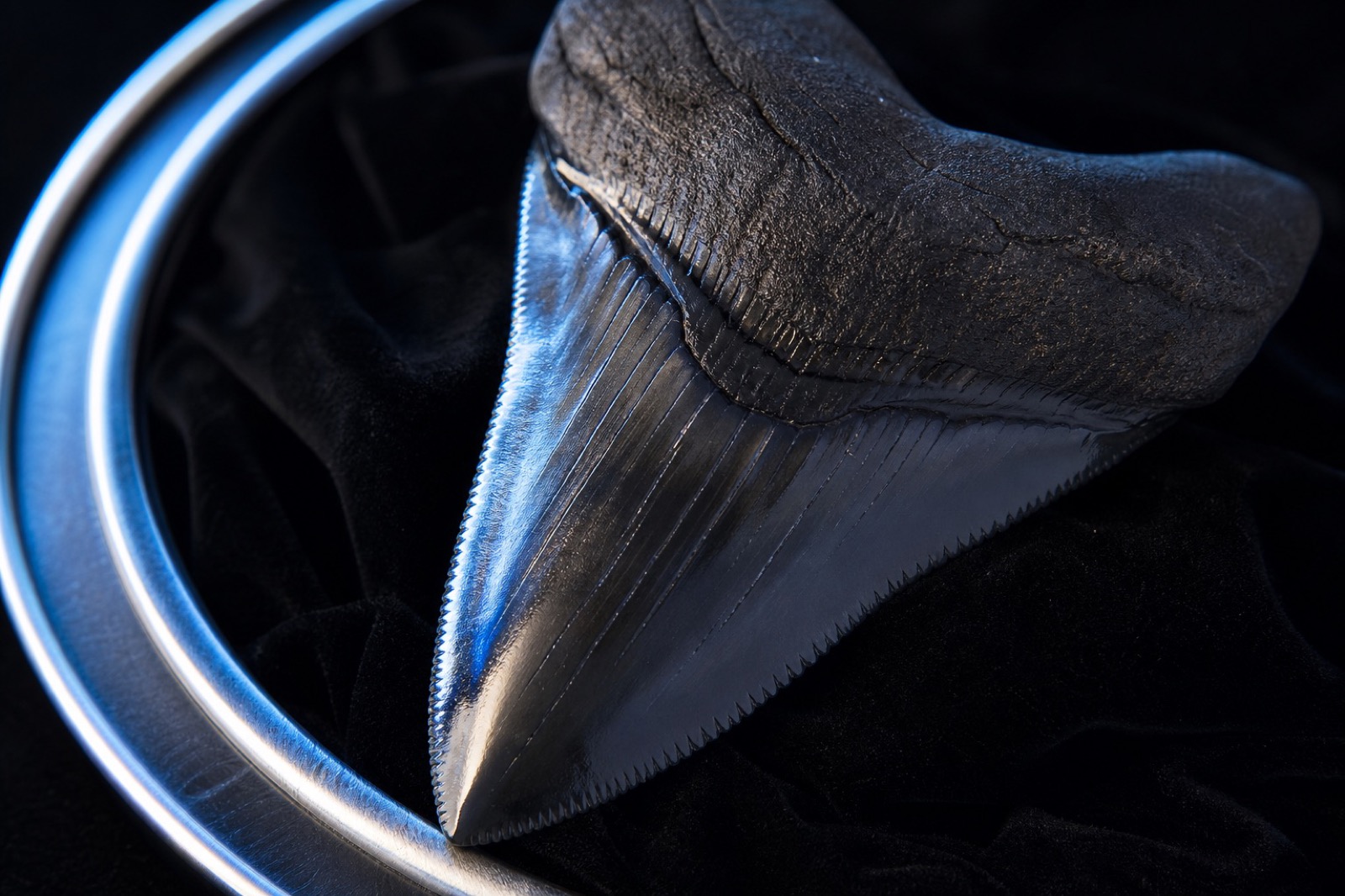
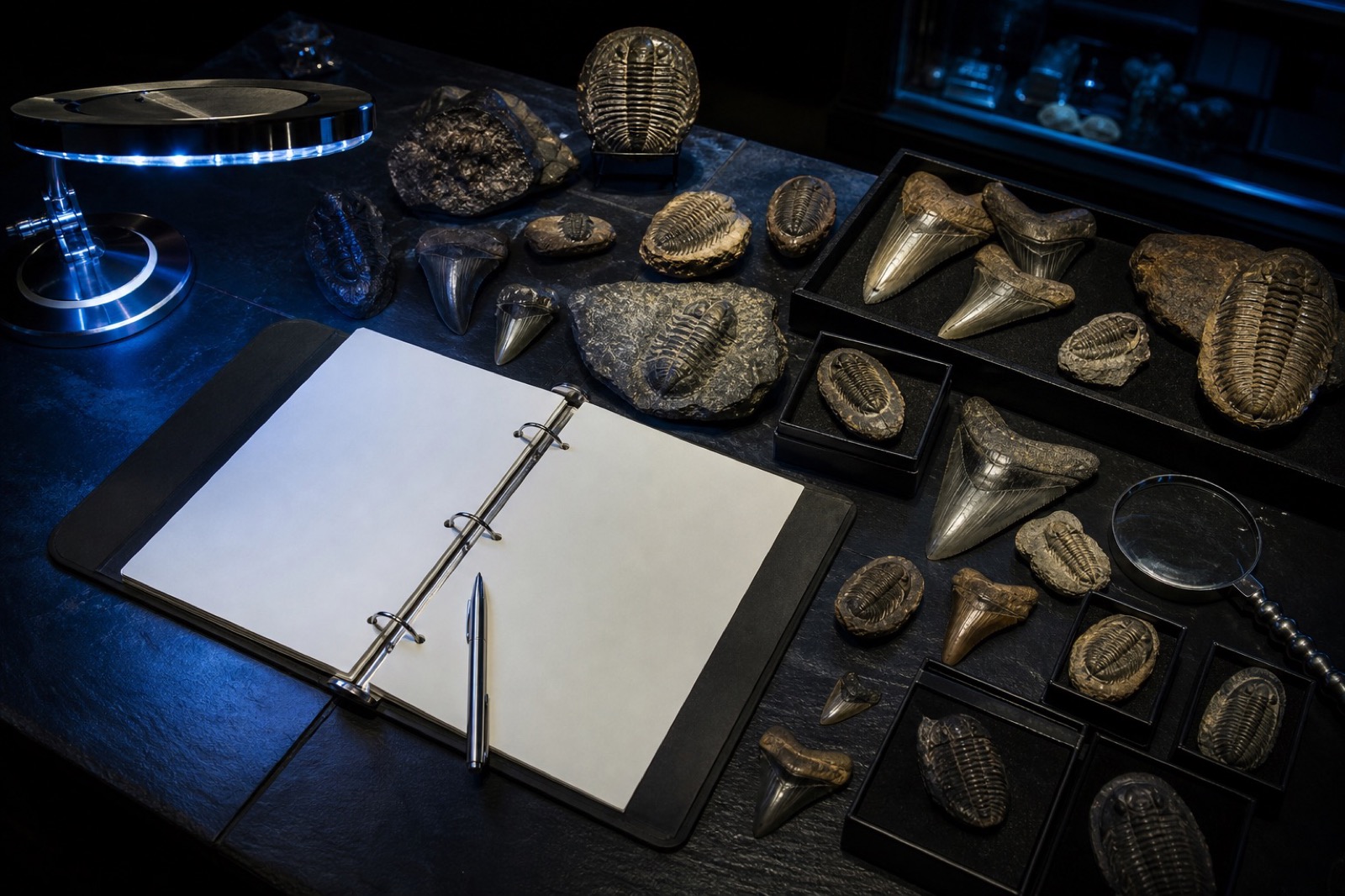
Every fossil listing tells a story in photographs. Sharp serrations, glossy enamel, matrix that looks like it was lifted from a textbook outcrop — those details sell lots. But the story that actually governs whether you can own, import, resell, or display a specimen is almost never visible in the hero image. It lives in paperwork: the country where the fossil formed, the category of land it was collected from, who authorized removal, and whether export matched local law at the time. Collectors who skip that chain often learn the hard way, through customs holds, disputed titles, or specimens that cannot travel to shows.
This article is educational context for buyers browsing an open marketplace. It is not legal advice, and laws change. Treat it as a field guide to the questions you should ask before money moves. Jurassic Depot surfaces origin questions, document admissions, and legal-risk scores on listings, but buyer beware still applies. Your due diligence starts with two words: country and land type. Private ranch in Montana is not the same legal universe as Bureau of Land Management ground, Moroccan Kem Kem beds, or Mongolian Gobi horizons — even when the teeth look equally impressive under studio lights.
Why country and land type come first
Nations treat fossils differently. Some classify certain vertebrate remains as national heritage the moment they are discovered. Others allow commercial trade in common invertebrates while restricting export of scientifically significant skulls. Still others focus enforcement on looting and falsified export stamps rather than on every shark tooth sold at a gem show. Because there is no single global fossil code, the first filter is always geographic: where did this specimen enter the commercial chain, and under what land regime was it collected?
Land type is the second filter. Private land with a written landowner agreement is the cleanest narrative in the United States for many common fossils — though clean does not mean automatic. Public land may prohibit collection entirely, allow casual collecting of invertebrates but not vertebrates, or require permits for any commercial removal. Tribal lands add another layer of sovereignty and consent. Mixed or unknown origin is where marketplace risk concentrates. Sellers sometimes honestly do not know; sellers sometimes use vague language because precise answers would shrink the bidder pool. Unknown origin is not a discount coupon. It is a flag.
Top buyer mistake
Photo-first bidding
Trusting aesthetics before provenance
First question to ask
Country + land type
Before restoration % or price
High-risk combo
Vertebrate + vague export
Extra scrutiny warranted
Safer habit
Redacted doc confirmation
Even when files stay private
United States: private land basics
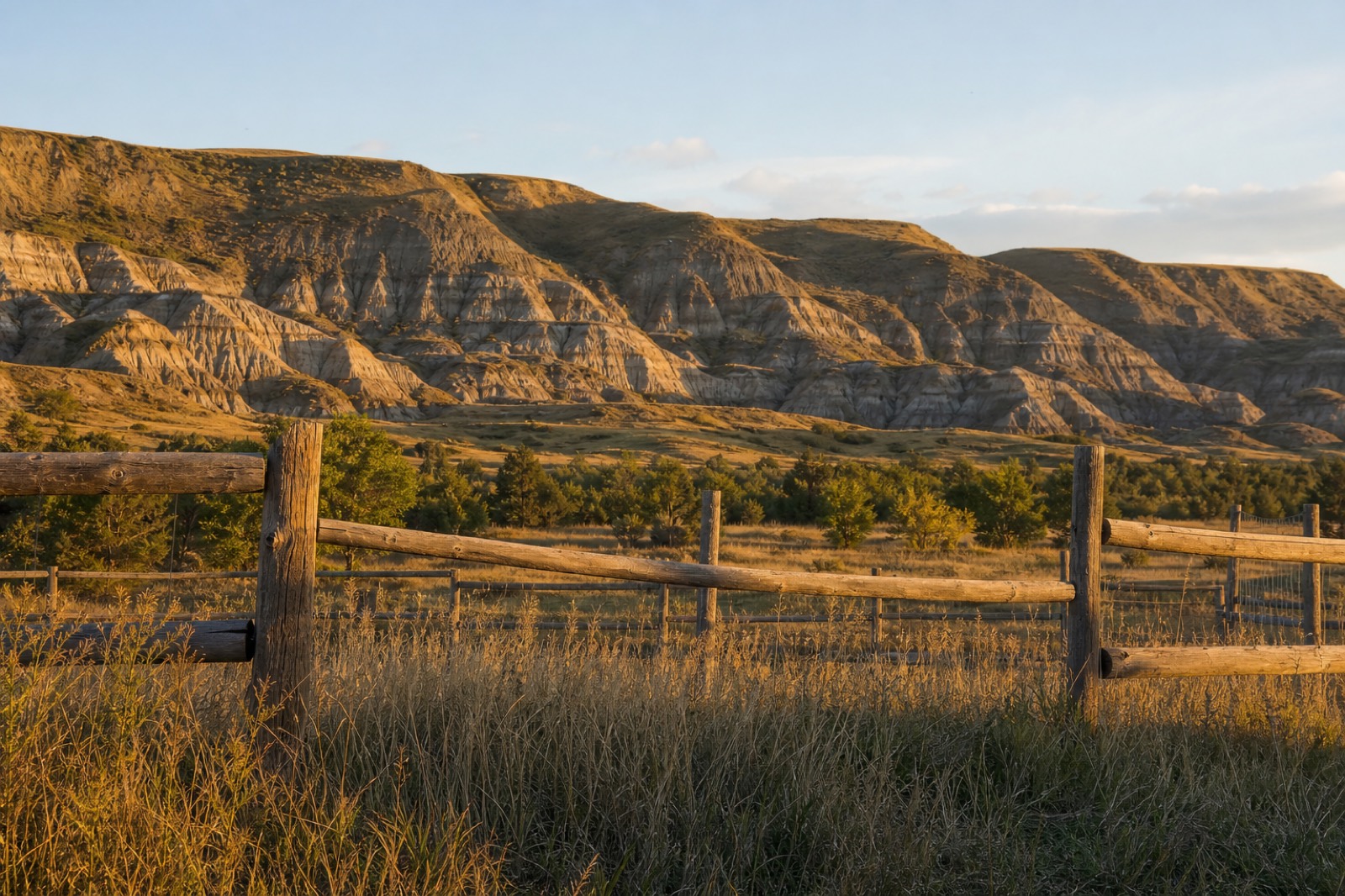
On private land in the United States, ownership often follows the surface estate unless split minerals or fossils were reserved in the deed — a nuance more common in oil-and-gas regions than newcomers expect. Ranchers and landowners may sell surface-collected fossils directly or lease collecting rights to commercial crews. A serious listing should be able to articulate that relationship, even if the landowner release stays private-on-file on a Jurassic Depot store. Buyers can still request redacted confirmation: date, county, landowner category, and whether the seller holds a bill of sale or lease language covering commercial resale.
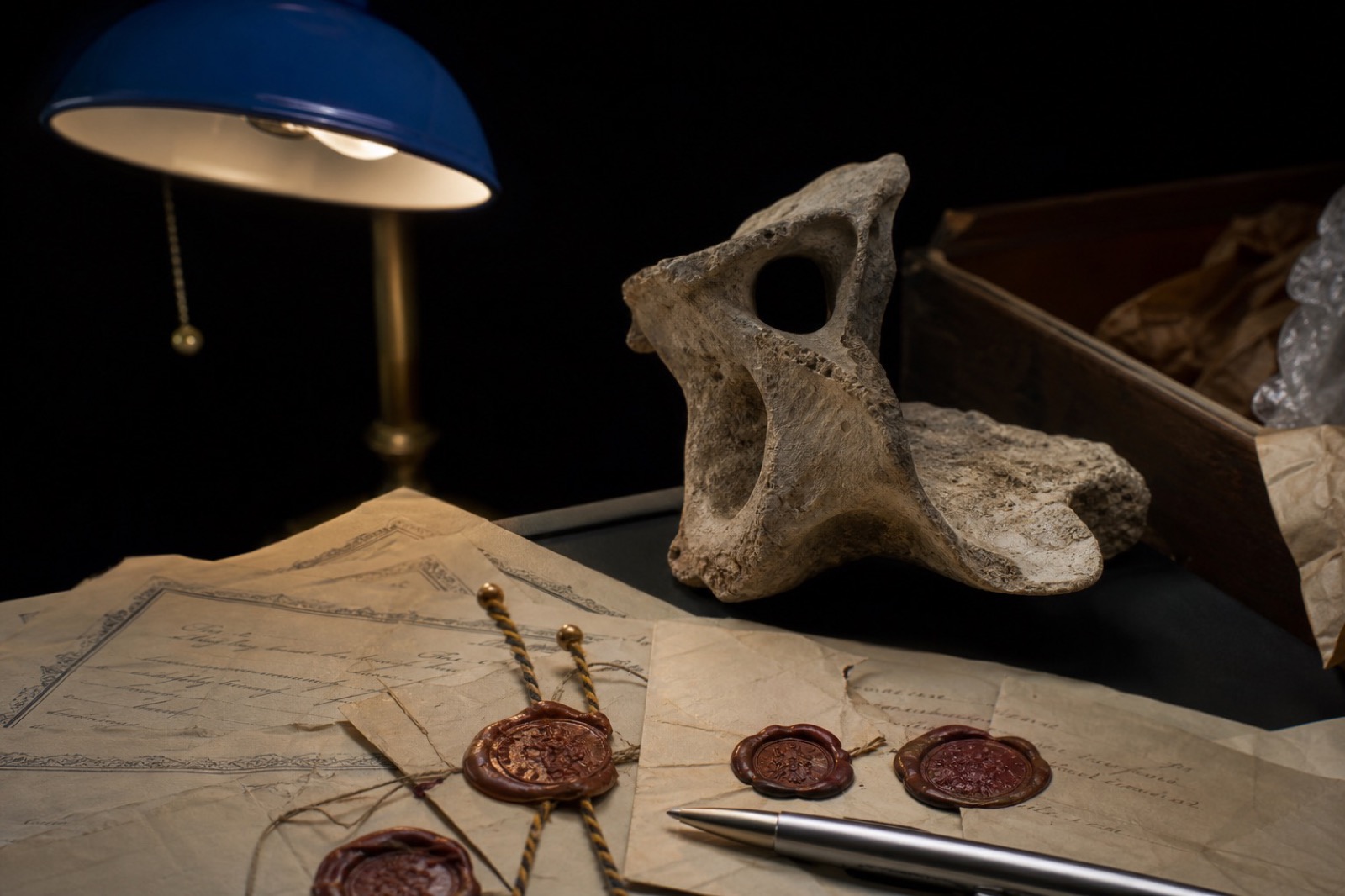
Private-land narratives fail when they are generic. Phrases like collected in Montana with permission sound reassuring until you ask permission from whom, for what commercial rights, and whether any prior dealer chain broke those terms. Good sellers distinguish surface collection on deeded acreage from ambiguous field pickup. They also separate fossils found by the listing dealer from fossils bought at wholesale with incomplete upstream paperwork. Chain of title matters when you eventually sell or donate to a museum.
 Sample photo
What a credible private-land packet includes
- Landowner name or entity category (redacted IDs are fine if confirmed)
- County and state, not just a regional nickname
- Whether commercial export and resale were explicitly allowed
- Prior bills of sale if the seller was not the original collector
- Any prep or restoration notes tied to the same inventory number
Public land, BLM, and federal rules
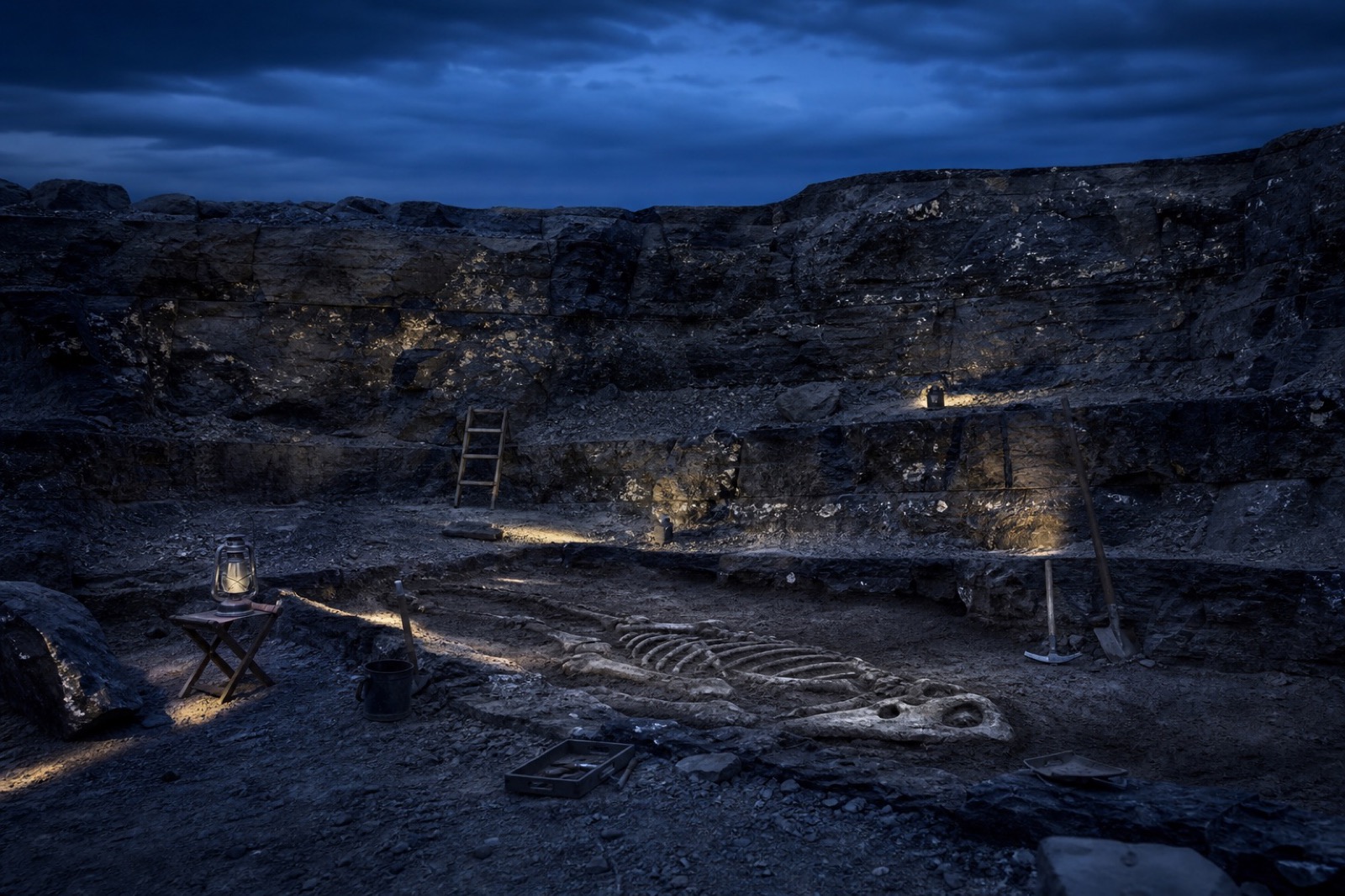
Federal and state public lands in the United States are not a free-for-all quarry for commercial vertebrate dealers. Bureau of Land Management rules, National Park Service prohibitions, Forest Service permit structures, and state trust land policies differ in detail, but the commercial buyer should internalize one principle: collection rules that allow a hiker to keep a common invertebrate are not the same as rules allowing a backhoe and export container. Vertebrate fossils on federal land have been the subject of high-profile enforcement and policy debate for decades. If a listing implies large vertebrate material from public land without permits, treat that as a stop sign until documentation says otherwise.
BLM-administered lands allow casual collecting of reasonable amounts of common invertebrate and plant fossils in many areas for personal use, subject to closures and cultural-resource protections. Commercial collecting typically requires authorization. Paleontological resource permits under broader federal frameworks exist for scientific institutions and qualified projects — not as a blanket pass for eBay sellers. A tooth labeled BLM land find without permit context is not a clever origin story. It is a compliance question you should not outsource to optimism.
 Sample photo
Hell Creek and the commercial vertebrate trade
Hell Creek Formation material — Tyrannosaurus rex, Triceratops, Edmontosaurus, Pachycephalosaurus, and associated fauna — dominates Western Hemisphere auction headlines. The formation spans parts of Montana, North Dakota, South Dakota, and Wyoming, mostly on private ranchland where commercial collecting has long been part of local economies. That legitimate pipeline feeds museums, private collectors, and prep labs worldwide. It also attracts confusion: buyers assume all Hell Creek material is legal because much of it is, when properly documented on private land with clear title.
Hell Creek context matters because name dropping is a sales tactic. A seller who says Hell Creek may mean a precise GPS on a deeded section, or may mean looks like the movies. Ask which state, which county, private or leased land, who collected, and whether export from the U.S. was routine for that specimen class. International buyers should confirm import requirements in their home country separately — U.S. legality at origin does not automatically solve foreign heritage rules.
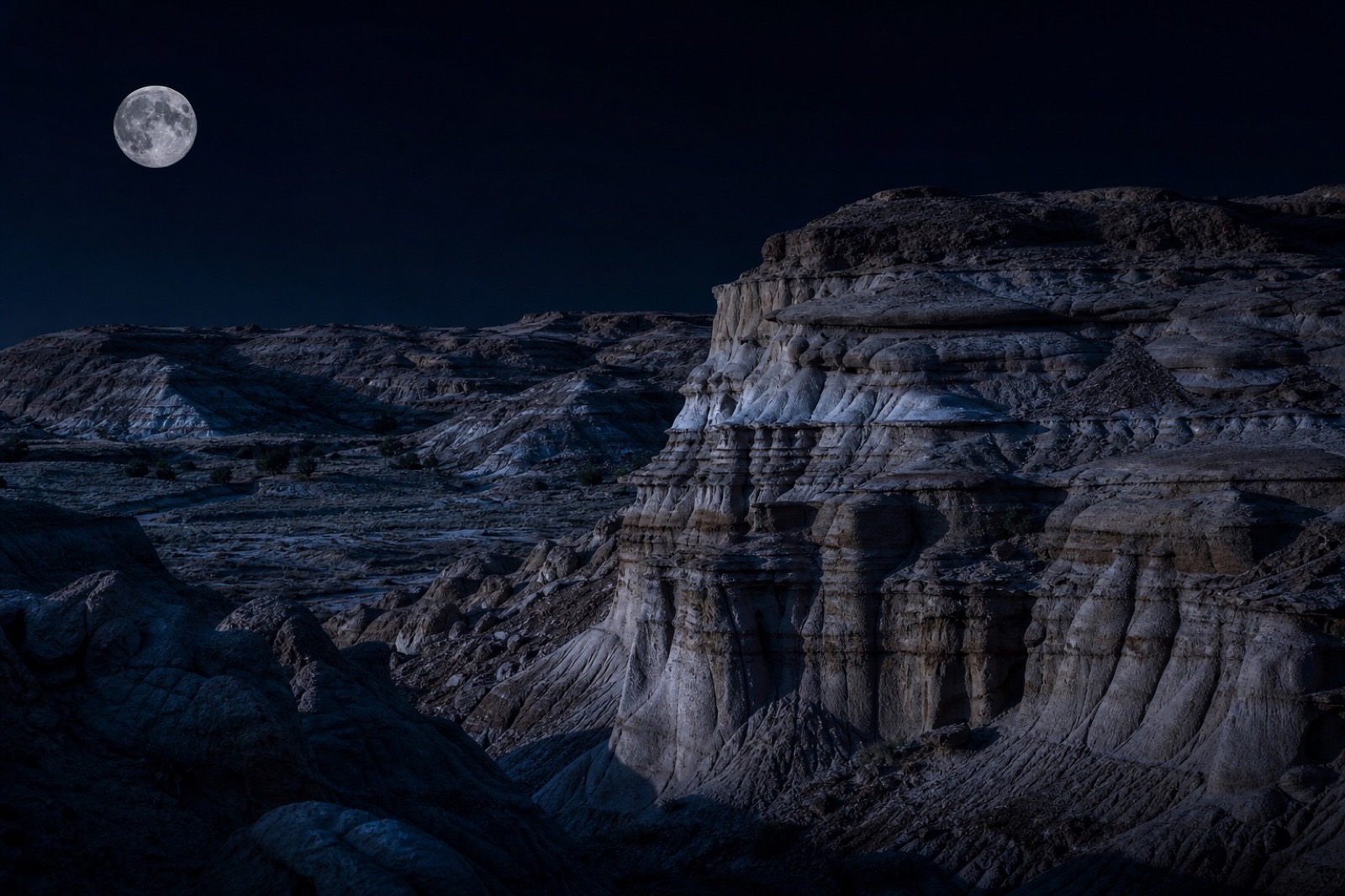 Sample photo
Species spotlight
Tyrannosaurus rex
Late Cretaceous (~68–66 Ma), Hell Creek Formation
- Most legally traded T. rex material on the open market originates from U.S. private land with documented landowner agreements — not from casual public-land collecting.
- High-value rex specimens attract title disputes because ownership can be worth millions; vague paperwork is a reputational and legal liability.
- Partial skeletons, isolated teeth, and pathologic bones carry different scientific and market profiles, but all require the same origin discipline.
- Museums increasingly ask for export and landowner documentation before acceptance, even for donations.
T. rex teeth were replaced throughout life — a single jaw could go through hundreds. That is why isolated teeth circulate widely, but a associated skull block is a different compliance conversation entirely.
Morocco: export paperwork and market reality
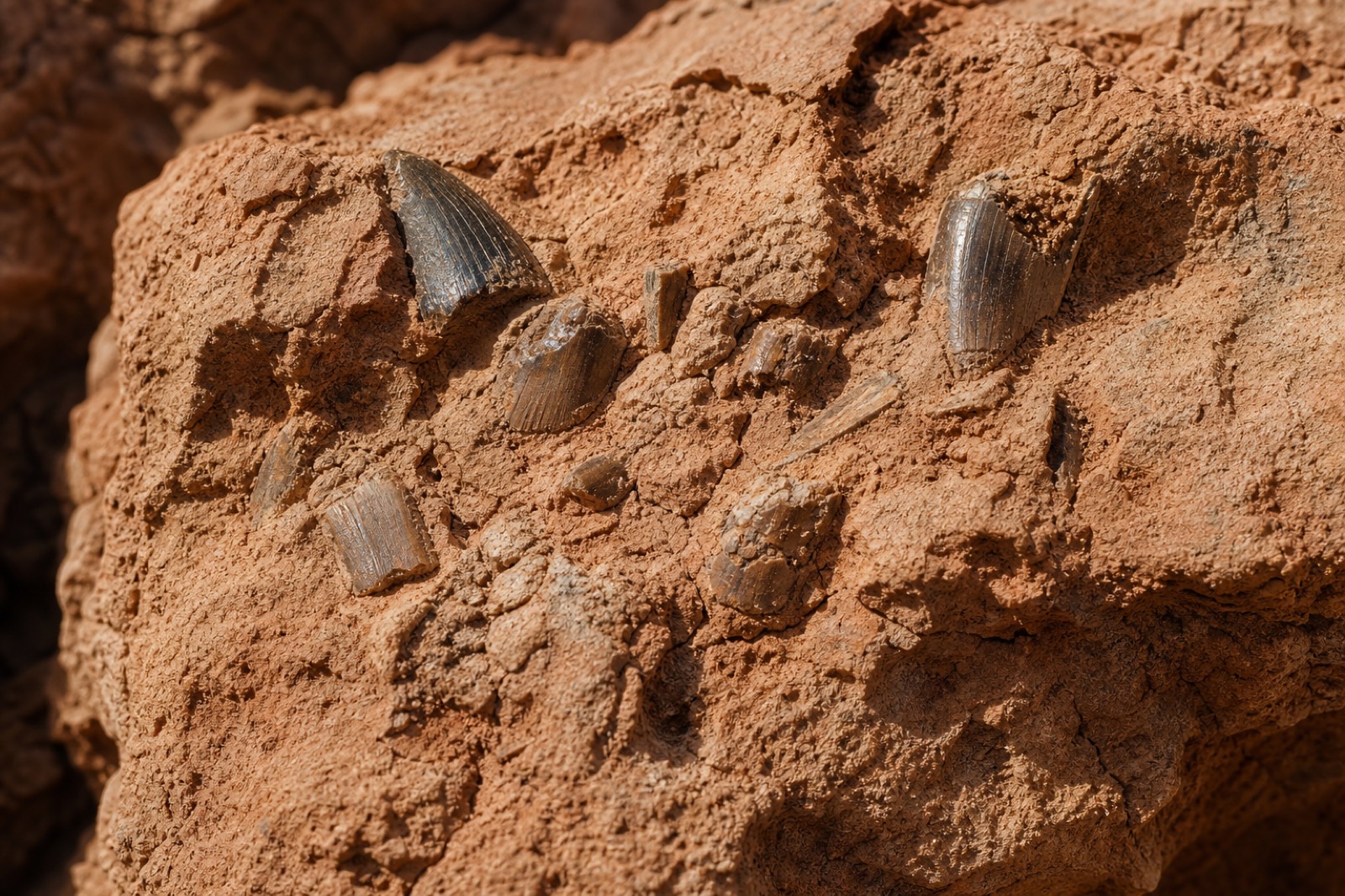
Morocco supplies enormous volumes of Devonian trilobites, Cretaceous mosasaur and plesiosaur material, Kem Kem dinosaur teeth and bones, and polished orthoceras products. The commercial pipeline is mature — and so are enforcement gaps, re-export confusion, and occasional mislabeled origins. Moroccan law has treated fossils as part of national patrimony with export controlled through permits and authorized dealers. Specimens that left without proper authorization create buyer risk even if they have been in the trade for years.
Experienced buyers look for export certificates, dealer licenses, or consignee paperwork that matches the seller story. Red flags include only an invoice from a middleman in Europe, origin listed as Morocco with no export date, or wholesale lots where every piece shares the same vague phrase from the Sahara. Trilobites from commercial quarries near Alnif and Erfoud often have clearer export histories than bulk Kem Kem teeth assembled from many sources. Ask whether the seller is the first exporter or purchased from a Moroccan-licensed dealer — and whether they will admit export documents private-on-file with verification status visible on their Jurassic Depot store.
 Sample photo
 Sample photo
Mongolia and strict vertebrate protections
Mongolia prohibits export of fossil vertebrates found in its territory, full stop, for commercial purposes under its cultural heritage framework. Famous dinosaurs from the Nemegt and Djadokhta formations — Velociraptor, Protoceratops, Oviraptor, Tarbosaurus bataar — appear in Western markets anyway, sometimes with forged paperwork or misdeclared countries of origin. High-profile repatriations have made headlines when specimens traced to Mongolia surfaced at auction. Buyers should treat Mongolian vertebrate material on the open market as guilty until proven innocent — and innocent here means extraordinary documentation, not a certificate of authenticity from a gift shop.
This is one area where Jurassic Depot’s prohibited-origin screening is designed to block obvious violations, but no automated filter replaces buyer judgment on edge cases. A Protoceratops skull labeled Central Asia or Gobi with no export packet is not a bargain. It is potential contraband. Invertebrates and non-restricted categories still require the usual export diligence, but vertebrate listings claiming Mongolian field origin deserve immediate pass-or-prove scrutiny.
United Kingdom foreshore collecting
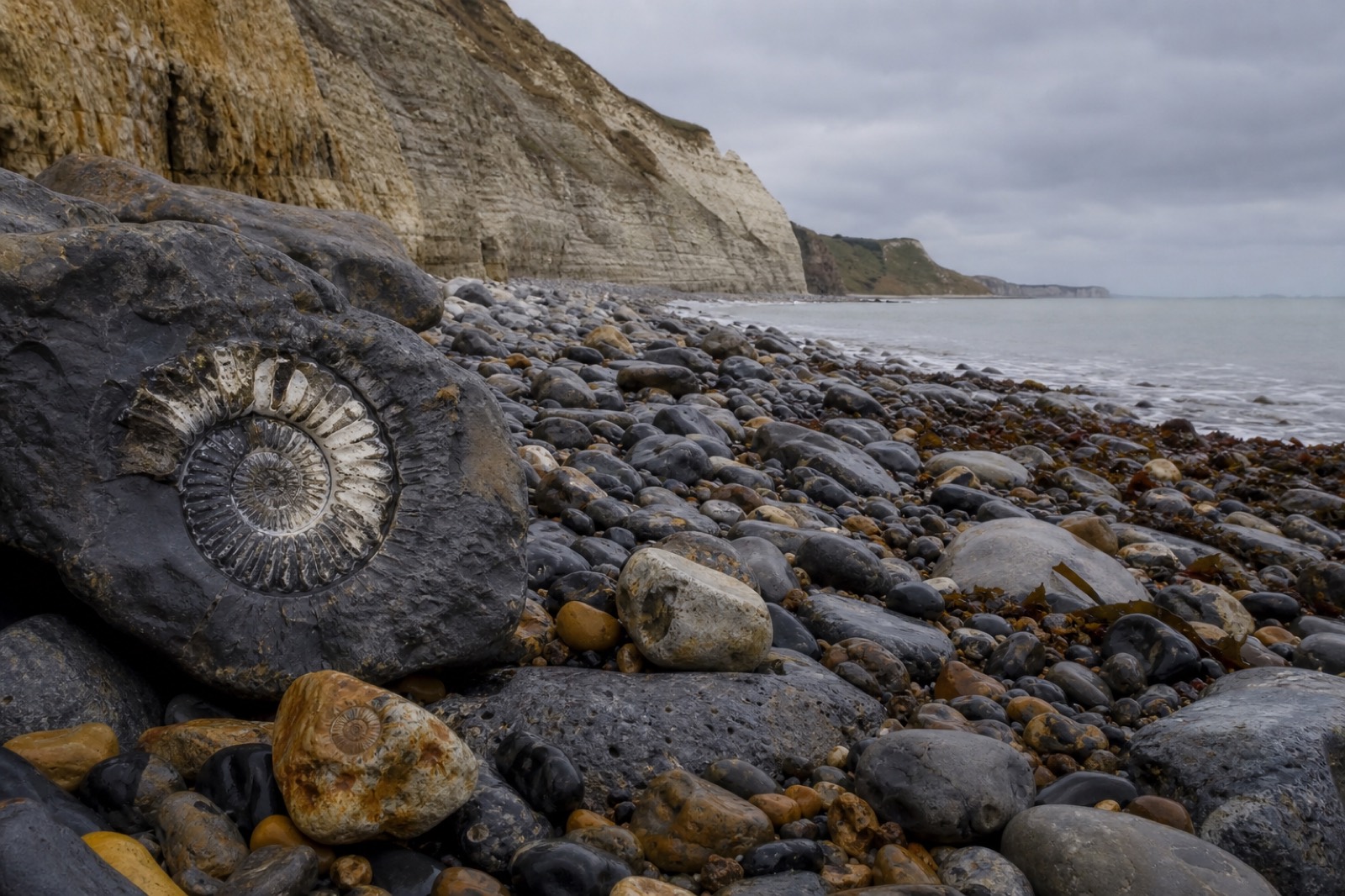
The UK presents a different model. On much foreshore and certain cliffs, collectors can legally search for fossils exposed by erosion, subject to local bylaws, Site of Special Scientific Interest rules, and safety restrictions. The Crown Estate controls much coastal foreshore; separate regimes apply in Scotland. Commercial trade in common finds like ammonites and belemnites from permitted collecting is part of British fossil culture. Rare or scientifically significant specimens may face reporting expectations under treasure or heritage frameworks depending on composition and circumstances.
International buyers importing UK fossils still need to understand export from the UK and import into their country. A Charmouth ammonite prepared in a Dorset workshop carries a different paperwork burden than a bulk gravel-sieved bag sold without collector identity. For marketplace purchases, confirm whether the seller collected personally or bought from a UK dealer with batch provenance. Foreshore collecting rights do not automatically transfer to unlimited commercial mining without landowner or estate permissions inland.
 Sample photo
CITES-adjacent confusion in the fossil trade
CITES — the Convention on International Trade in Endangered Species — is primarily designed to protect modern endangered wildlife and does not generally apply to Mesozoic dinosaur fossils like Tyrannosaurus teeth. However, CITES can and does apply to certain fossil materials: mammoth ivory trade is regulated in some jurisdictions, cave bear teeth and other Pleistocene subfossil material can trigger CITES controls in the EU and UK, and shipments may include mixed materials such as ivory-inlay display stands or ostrich eggs that fall under separate CITES listings. Buyers also encounter CITES language on fossil listings because sellers confuse categories or shipping brokers apply broad templates.
The practical takeaway: when a listing cites CITES for a standard dinosaur tooth, ask why. It may signal seller inexperience rather than illegal fossil trade — or it may mask a different restricted component in the shipment. Conversely, absence of CITES language does not mean import is automatic. Customs uses harmonized tariff codes, country-of-origin rules, and cultural-property flags independent of CITES. Mammoth ivory, cave bear teeth, and some Pleistocene material trigger distinct controls in the EU, UK, and several U.S. states — and even fossil walrus ivory can require permits. Treat CITES mentions as a prompt to read the full composition line, not as the sole compliance framework.
 Sample photo
Documentation checklist before you bid
Before you bid on a high-value or international lot, walk through a repeatable checklist. You will not always receive every document pre-sale — privacy is legitimate for landowner names and GPS — but you should see admissions on the seller’s Jurassic Depot store indicating which files exist and whether staff review marked them consistent or flagged. Silence is not privacy; it is opacity.
Interactive tool
Pre-bid provenance checklist
0/10 checked
Use this before committing to vertebrate, international, or four-figure invertebrate lots. Save screenshots of listing disclosures and store admissions.
Reader poll
When you open a fossil listing, what do you check first?
Results from fossil collector community
What this means on Jurassic Depot
Jurassic Depot is an open marketplace with structured disclosure: seller stores, document ledgers, restoration percentages, authenticity and legal-risk scores, and fossil-law guides keyed to major collecting regions. We block known prohibited-origin categories where screening can identify them. We do not guarantee every seller narrative — buyer beware still applies. The platform’s job is to make omission harder and diligence faster, not to replace your judgment or legal counsel.
Start with country and land type. Read the store documents panel before you fall in love with matrix color. Ask for redacted confirmations when files are private-on-file. When origin is unknown, treat the lot as a risk budget item, not a lucky strike. Provenance first is cheaper than a customs seizure, a chargeback fight, or a specimen you cannot show at a museum years later. The fossil trade rewards patient buyers who treat law as part of the hobby’s craft — alongside preparation quality, scientific interest, and display pride.
“A fossil without provenance is a photograph that weighs something.”