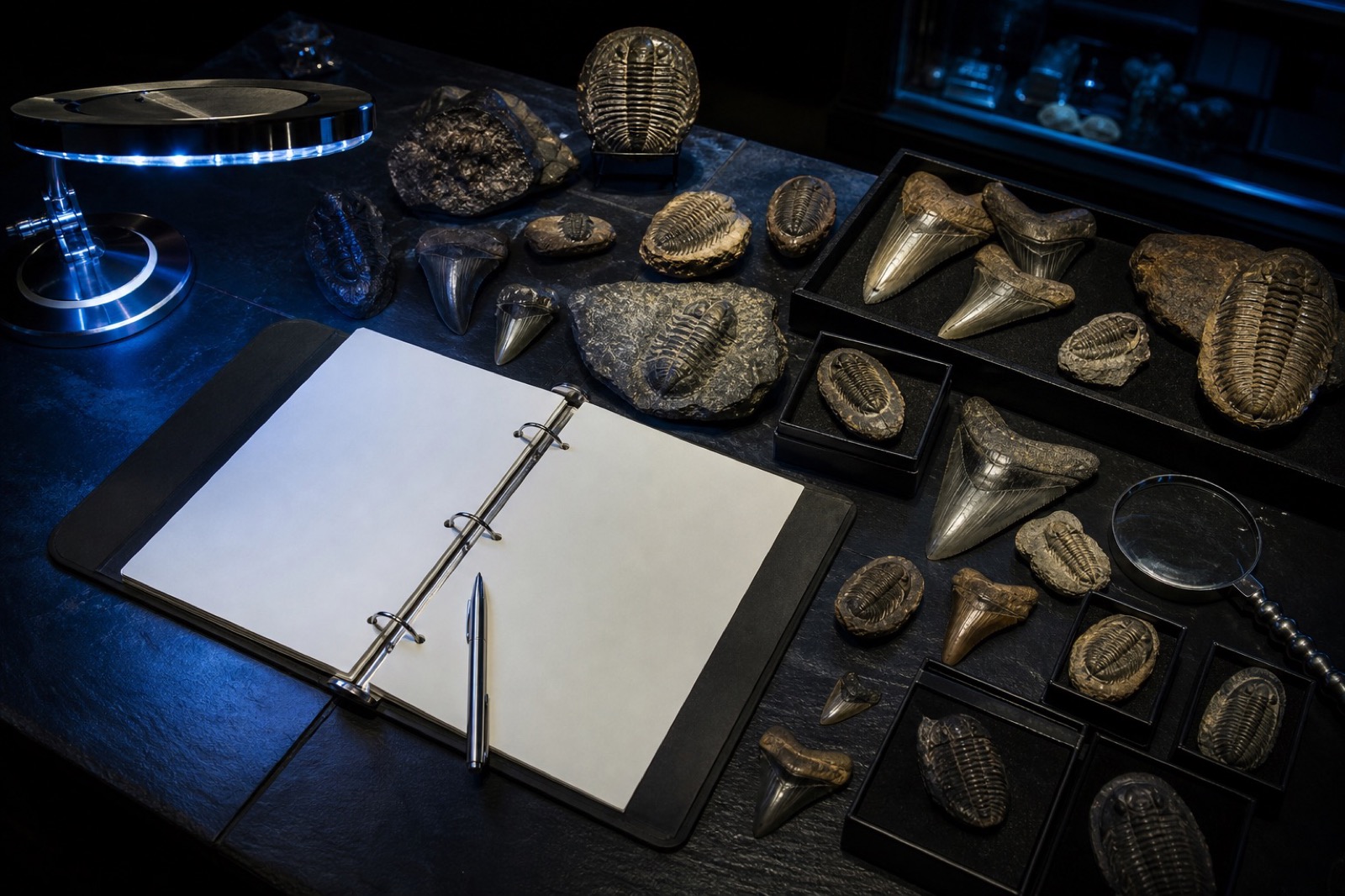
Jurassic Depot is an open marketplace. That phrase is not fine print — it is the operating model. Sellers list fossils; buyers bid or buy; disputes and due diligence remain part of the trade, as they do at shows, in private deals, and on every platform that refuses to pretend otherwise. What Jurassic Depot adds is a structured pre-bid briefing: seller stores with document ledgers, restoration percentages when known, authenticity and legal-risk panels, and multi-factor scores meant to compress hours of forum scrolling into a glanceable summary. This article explains how those checks work, what they cannot promise, and how to combine platform signals with your own expert review on high-value lots.
Nothing here is a certificate of perfection. Scores are decision aids, not guarantees. A high trust tier does not replace UV inspection on a four-figure tooth. A clean legal-risk panel does not mean your home country will import the lot without paperwork you still must file. The goal is transparency before commitment — the strongest disclosure and screening stack we can build without turning the marketplace into a closed auction house that only sells its own inventory.
An open marketplace with visible risk
Closed inventory models hide conflict by limiting who may sell. Open models expose conflict by letting many sellers compete — which means quality variance is visible instead of laundered through a single brand. Jurassic Depot chooses openness with guardrails: identity and source questionnaires for sellers, prohibited-origin blocks where identifiable, document admissions even when files stay private, and listing fields that punish vague origin language by leaving legal-risk scores unset or flagged.
Buyer beware still applies. Our refusal to hide that fact is deliberate. Collectors deserve to know that a polished Moroccan trilobite from a trusted store and a composited Kem Kem jaw from a first-time seller can both appear in the same search results. The difference should be readable before the hammer falls.
Core score pillars
6
Trust, provenance, authenticity, docs, legal, restoration
Private files allowed
Yes
Hiding existence is not
Automated blocks
Origin + category
Where rules are explicit
Expert review
Buyer option
Recommended on high-value lots
What the listing scores actually measure
Each serious lot on Jurassic Depot is designed to surface six interlocking dimensions: seller trust, provenance clarity, authenticity confidence, documentation completeness, legal risk, and restoration disclosure. They are displayed as separate scores or bands rather than a single stars-out-of-five gimmick because a specimen can be geologically authentic yet legally murky, or legally fine yet heavily restored. Collapsing those axes misleads buyers.
Trust reflects seller history: completed sales, review patterns, chargeback rates, identity verification tier, and how consistently the store fills document fields. Provenance reflects how specifically origin is stated — country, land type, formation when credible, and whether unknown origin is admitted honestly versus omitted. Authenticity reflects listing photos, prep consistency, known fake patterns for that category, and any staff or community flags. Documentation reflects the store ledger: which document types exist, which are public, which are private-on-file with verification status. Legal risk reflects origin country, specimen class, export narrative, and hits against prohibited-origin rulesets. Restoration reflects disclosed percentage, UV map availability, and consistency between description and imagery.
 Sample photo
Trust tier and seller history
Trust tier is not charisma. It is behavioral data. New sellers are not banned — every established dealer was new once — but their listings carry fewer historical signals, which the UI should show clearly. Established stores with multi-year sales, documented dispute resolutions, and consistent document admissions score higher. Patterns matter: sellers who repeatedly list vertebrate material with unknown origin do not accumulate trust through volume alone.
Reviews on Jurassic Depot attach to stores, not ghost listings that vanish after sale. That design nudges sellers to protect reputation capital across auctions and fixed-price inventory. When you compare two similar teeth, check trust before you check serration count. Serrations regenerate in Photoshop; multi-year store behavior is harder to fake.
 Sample photo
Provenance signals we surface
Provenance scoring rewards specificity and punishes evasion. A listing that states Morocco, Kem Kem, exported via licensed dealer in 2019 with export doc private-on-file scores differently from Morocco, Sahara, no land type. Hell Creek material with county and private-land admission scores differently from Hell Creek vibes only. The system also detects internal consistency: if restoration notes reference a prep lab invoice tied to a U.S. address while origin says Morocco with no export story, provenance and documentation scores should diverge in ways that prompt questions.
GPS coordinates are never required on public listings — they invite looting and landowner harassment — but serious sellers should admit land category and offer redacted confirmation on request. Jurassic Depot’s provenance panel is built to make honest unknowns visible: unknown origin is a valid field, not a blank that implies private perfection.
Provenance red flags the screen catches
- Formation name without country or land type
- Country hop — listing text differs from store default origin
- Vertebrate material with no chain-of-title admission
- Conflicting dates between export story and prep invoices
- Use of banned or restricted origin keywords without documentation
Authenticity review and fake patterns
Authenticity review combines automated pattern checks with category-specific heuristics developed from common fraud in the trade. Cast teeth sold as real, composited jaws, painted trilobites, and tourist-shop replicas mislabeled as museum grade each leave visual and textual fingerprints: matrix mismatch, uniform serration casting lines, wrong enamel texture under raking light, tool marks inconsistent with claimed locality.
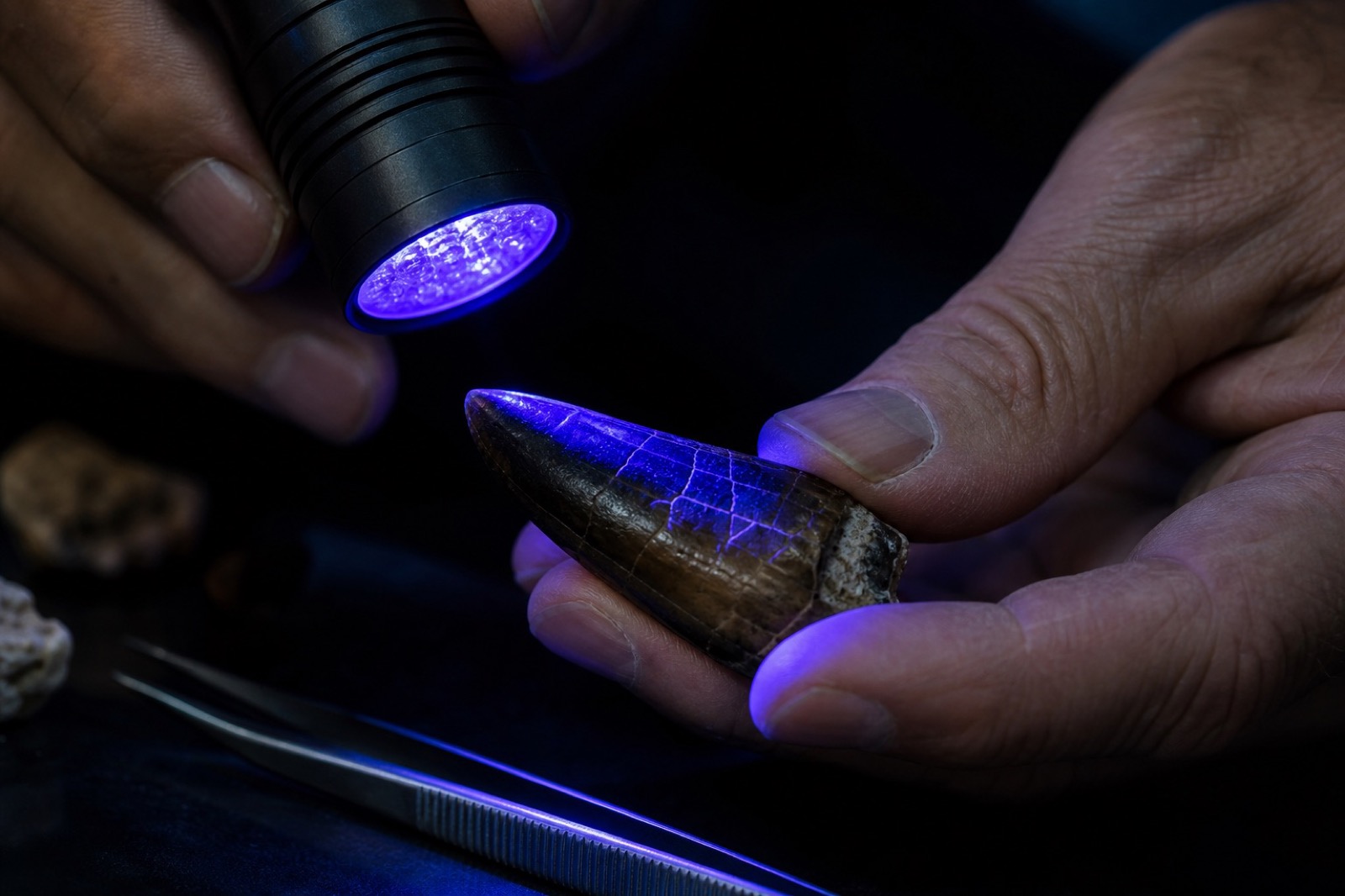
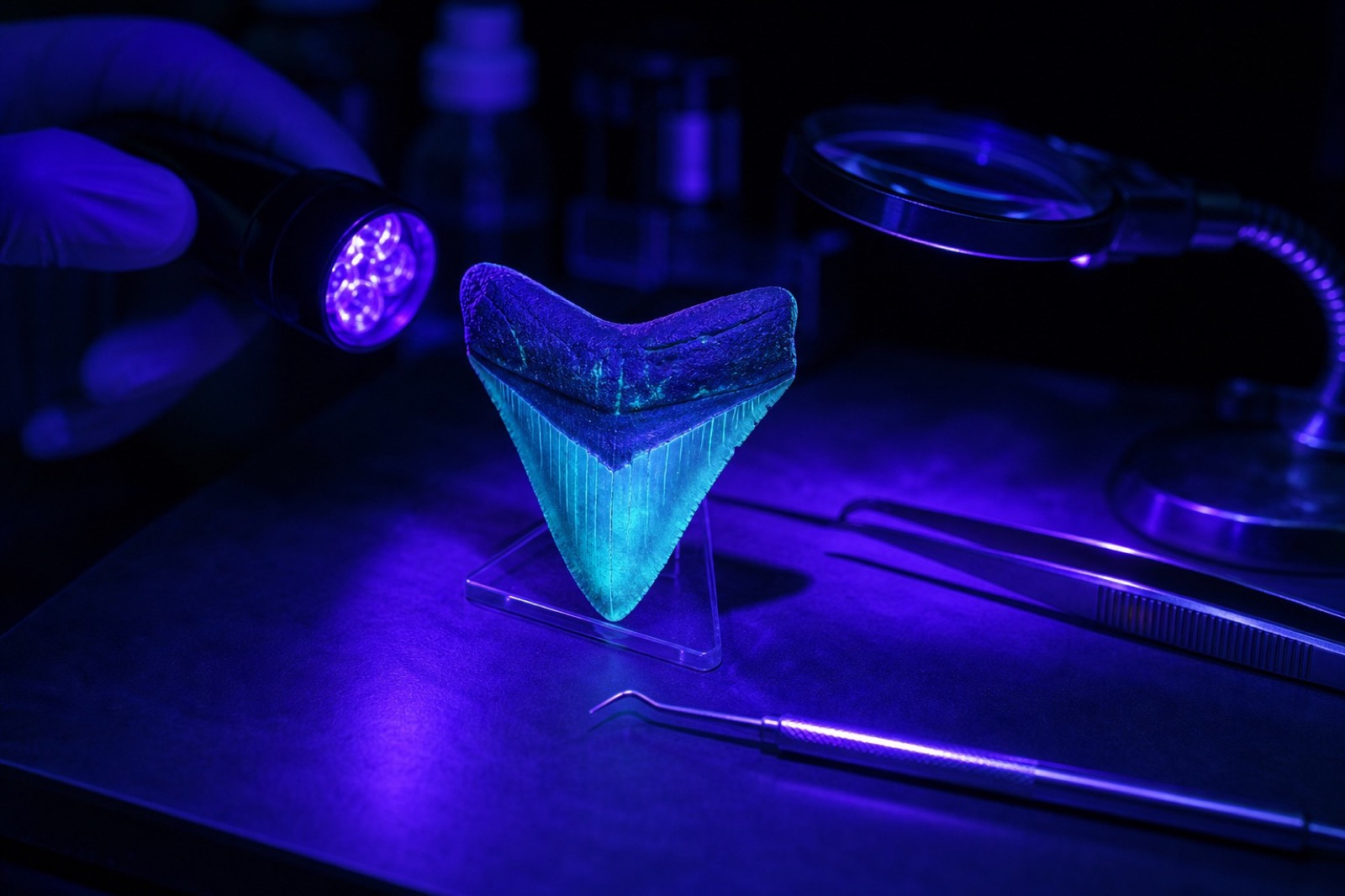
Listings can request or display UV fluorescence maps where restoration epoxy glows differently from fossil bone or enamel. When UV maps are private-on-file, the restoration percentage and a plain-language disclosure note should still be public. Authenticity scores drop when sellers refuse baseline photography — multiple angles, scale, reverse views — not because refusal proves fake, but because verification cannot proceed.
 Sample photo
The store document ledger
Every Jurassic Depot seller store includes a document ledger: export certificates, landowner releases, bills of sale, prep lab reports, UV maps, and custom categories. Documents may be public PDFs or private-on-file admissions. The ledger shows document type, upload date, verification status, and whether staff review found inconsistencies — not necessarily the landowner’s phone number.
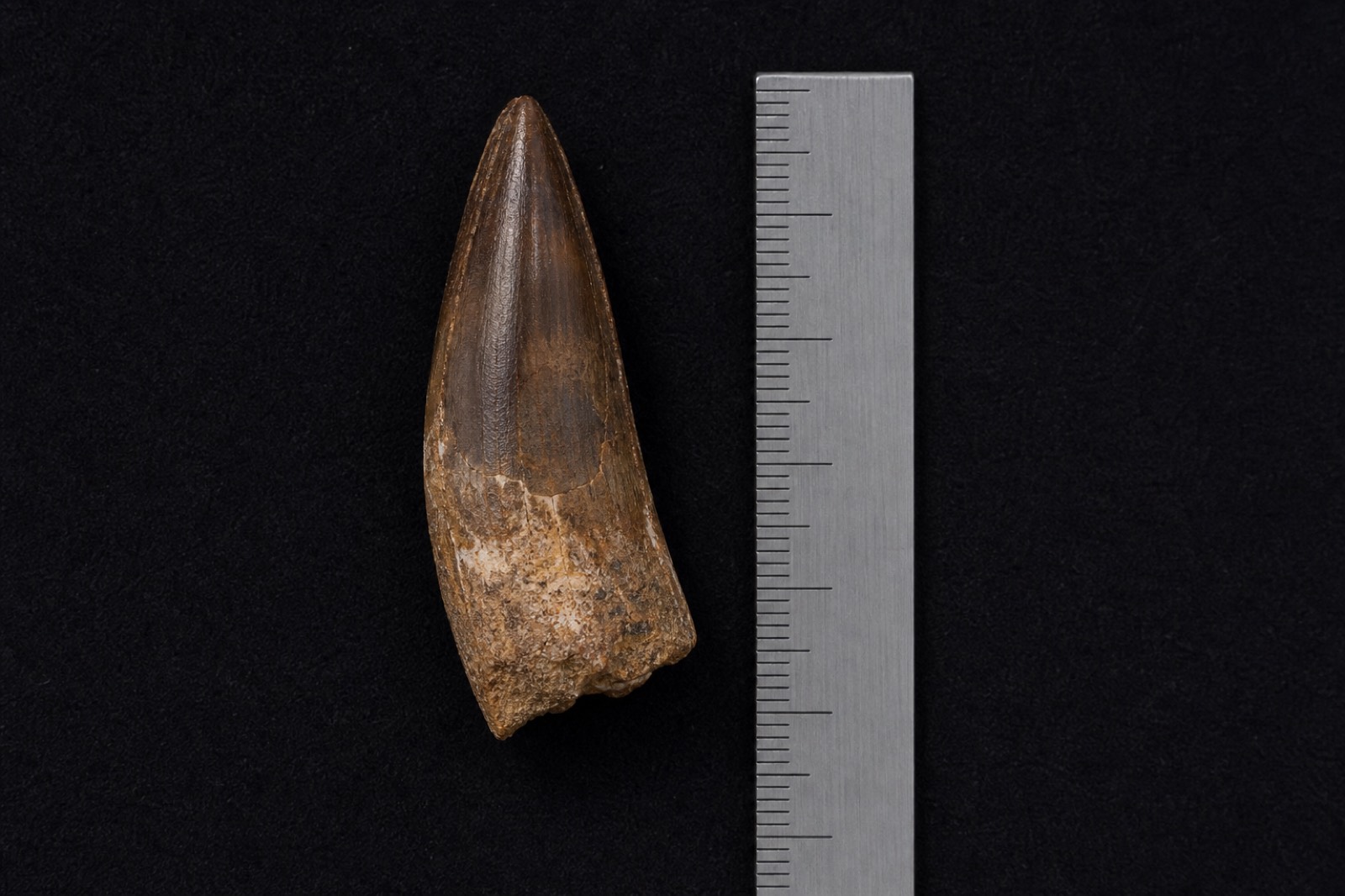
Listing checks cross-reference the ledger. A T. rex tooth listing should link to store-level export and chain-of-title admissions when claimed. Missing admissions are not neutral; they are negative information. Sellers who say paperwork exists but refuse to admit it on the ledger face listing penalties because hiding existence is different from keeping content private.
Legal-risk screening
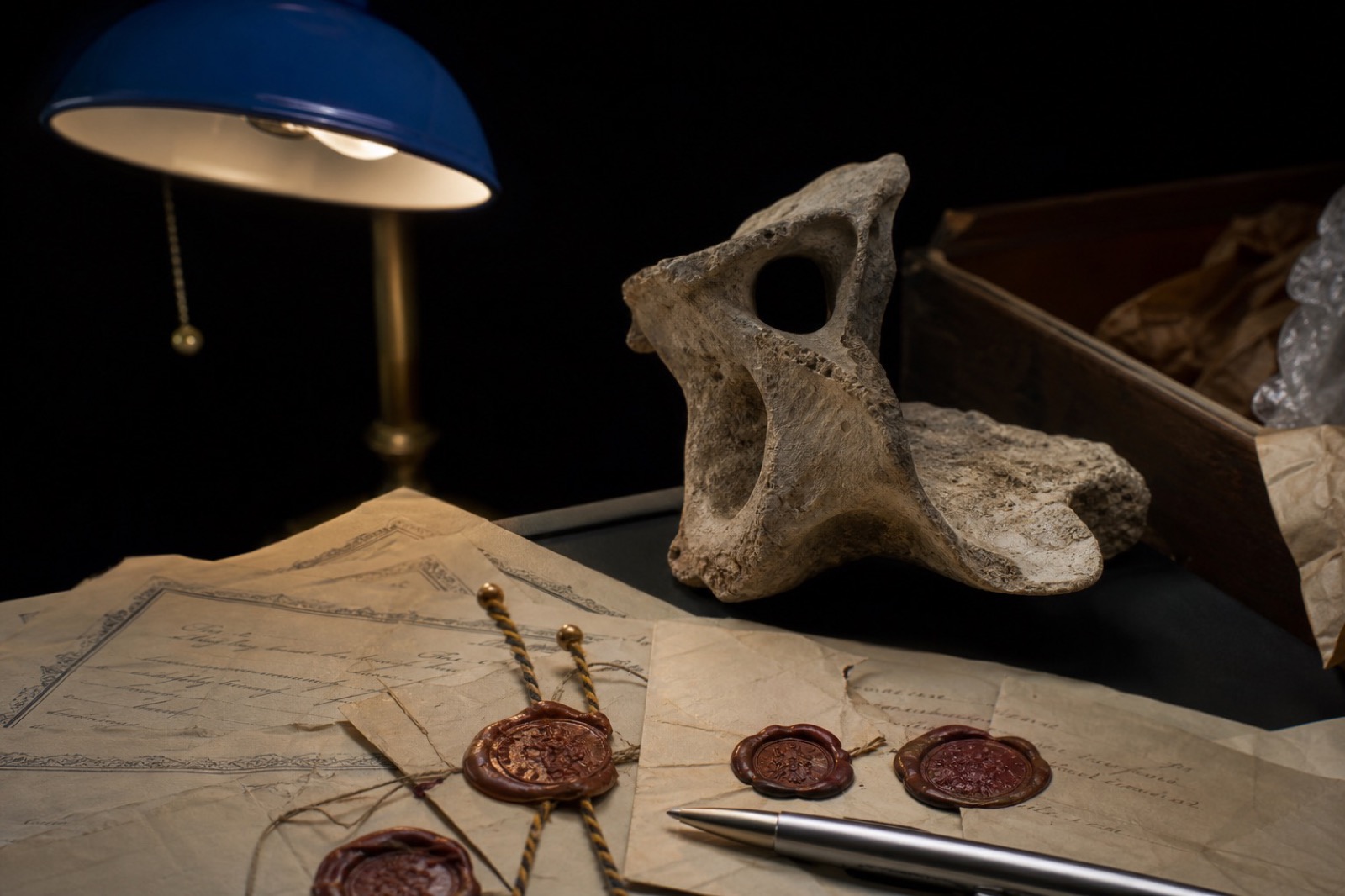
Legal-risk screening applies country and specimen-class rulesets drawn from our fossil-law education pages — not legal advice, but structured flags. Obvious prohibited-origin combinations can block publication. Gray areas — vague export, mixed wholesale batches, vertebrate material with incomplete chain — surface as elevated risk rather than silent approval.
International buyers must remember that Jurassic Depot legal-risk scores focus on marketplace integrity and stated origin, not your national import desk. A lot can score moderate risk here yet trigger high hassle at home customs. Use scores as one input alongside country guides linked from the listing.
 Sample photo
Restoration percentage and UV maps
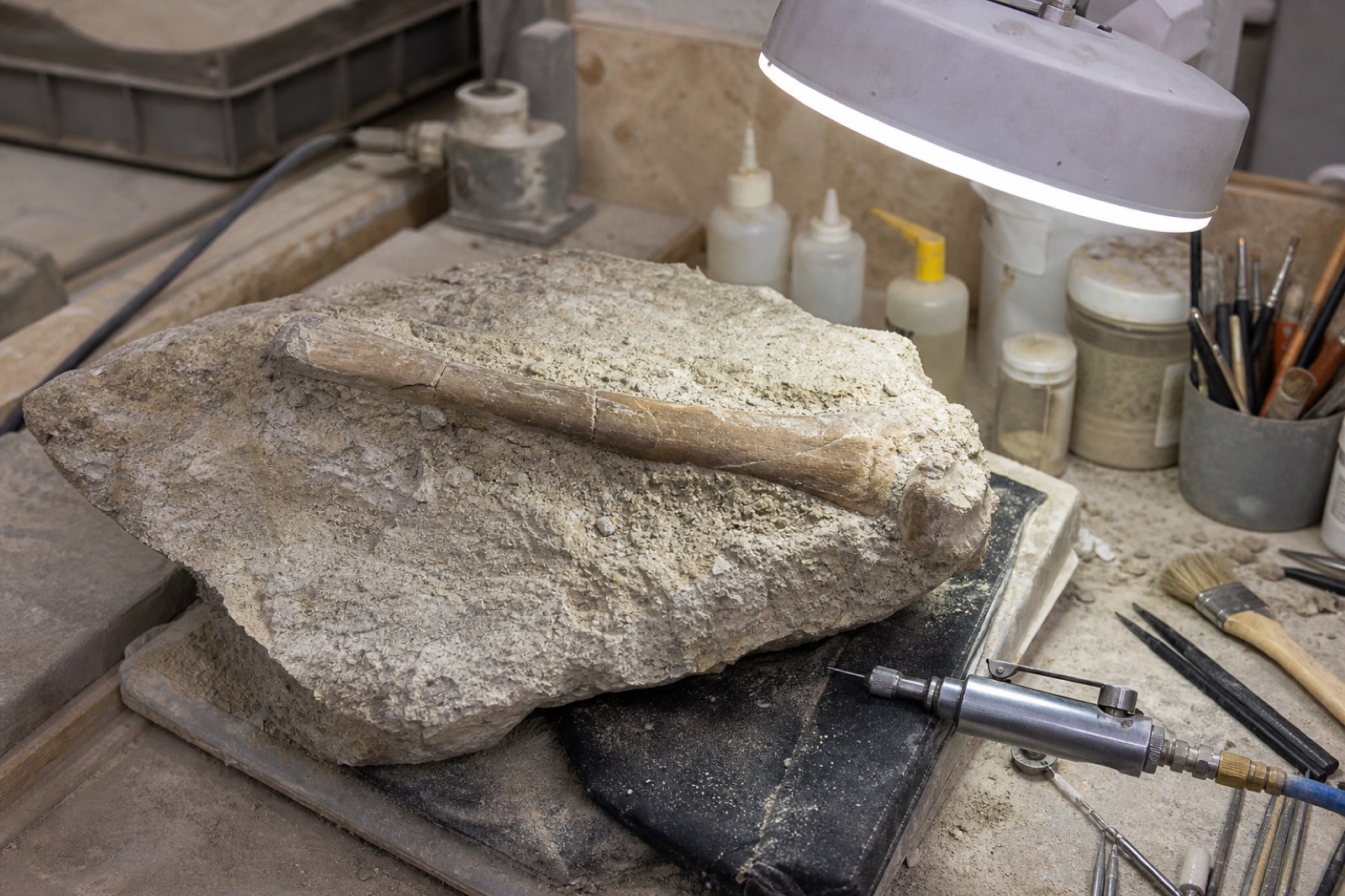
Restoration is not sin. Concealed restoration is. Jurassic Depot listings include restoration percentage when known — tip rebuilds, root fills, matrix reconstruction, crack stabilization — and encourage UV maps for teeth and bones where epoxy hides easily. Scores reward precise language: 12% epoxy fill at distal tip scores better than pristine unless photos contradict.
Staff and algorithmic checks compare disclosure to imagery. A tooth described as 5% restored with obvious gloss mismatch on the crown should flag authenticity and restoration together. Buyers comparing two Mosasaur teeth should weigh restoration percentage before comparing length measurements — extra centimeters from epoxy are not growth rings.
 Sample photo
Private-on-file versus hidden documents
Privacy is legitimate. Landowners, dealers, and prep labs often require redaction. Jurassic Depot’s rule: you may keep sensitive files private; you may not pretend they do not exist. Private-on-file admissions appear on the store ledger with verification status. Buyers see that an export certificate was supplied and reviewed — not necessarily the stamp scan.
Hidden documents — claims of paperwork with no ledger admission — are a policy violation and should depress trust and documentation scores. The distinction protects sellers from doxxing while protecting buyers from opacity games.
Interactive tool
Pre-bid listing review checklist
0/10 checked
Walk through this on any lot over your personal risk threshold — adjust thresholds as you learn.
Reader poll
Which listing score do you weigh most before bidding?
Results from fossil collector community
How to use scores without over-trusting them
Use scores to sort attention, not to replace it. A high overall profile with green documentation and moderate legal risk might be perfect for a domestic invertebrate collector. The same profile on an international vertebrate lot might still need a customs broker. A new seller with mid scores might be an honest beginner — or a flipper laundering wholesale mystery boxes. Read the narrative, not just the color.
When something feels off, pause. Ask the seller structured questions in writing. Request redacted documents. Use third-party expert review for high-value categories. Jurassic Depot’s checks exist so those steps start from data instead of guesswork — but the steps still belong to you. The strongest marketplace is one that refuses to hide risk while giving buyers the tools to navigate it like professionals.
Species spotlight
Carcharocles megalodon
Neogene (~23–3.6 Ma), global marine deposits
- Megalodon teeth are legal to trade from many U.S. and Indonesian contexts but are restoration-heavy in online markets.
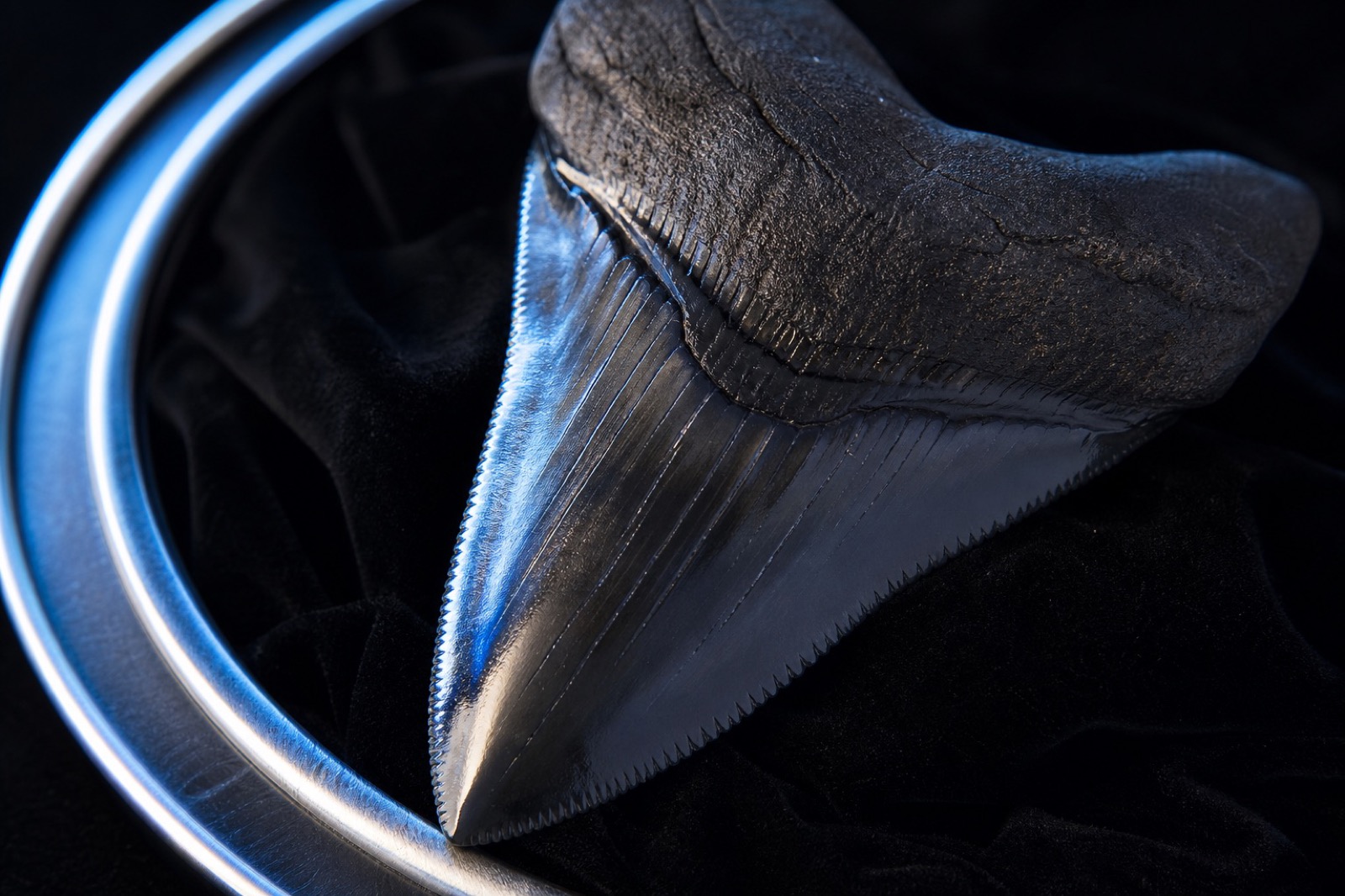
- Listing checks weight serration consistency, root texture, and bourlette structure against known cast molds.
- Size claims should match weight and enamel thickness — oversized casts exist.
Megalodon lost thousands of teeth in life; rivers in South Carolina and Georgia erode them out by the bucket — which is why provenance still matters even when supply seems endless.
 Sample photo
“Trust the store ledger before you trust the glamour shot.”