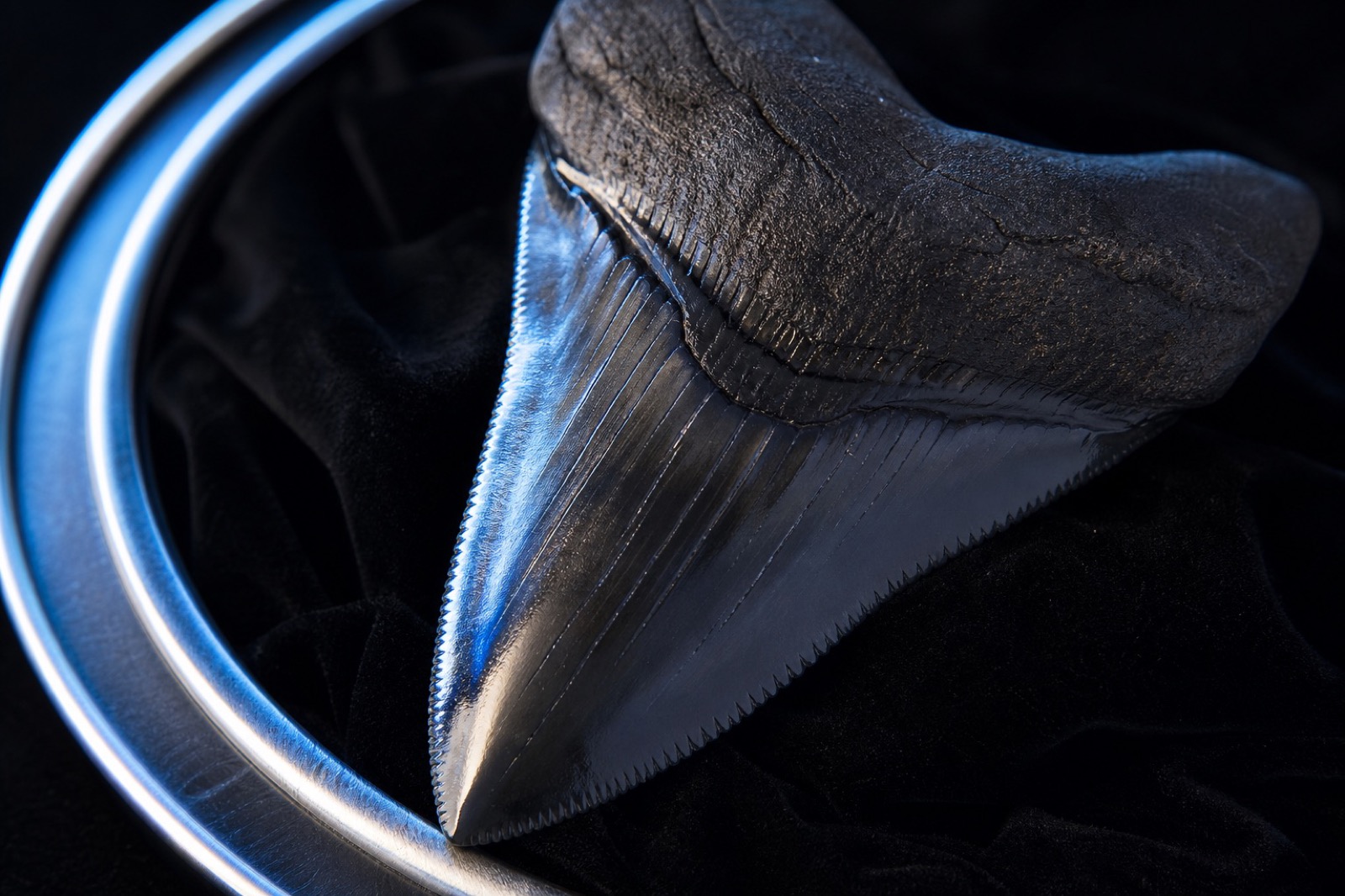
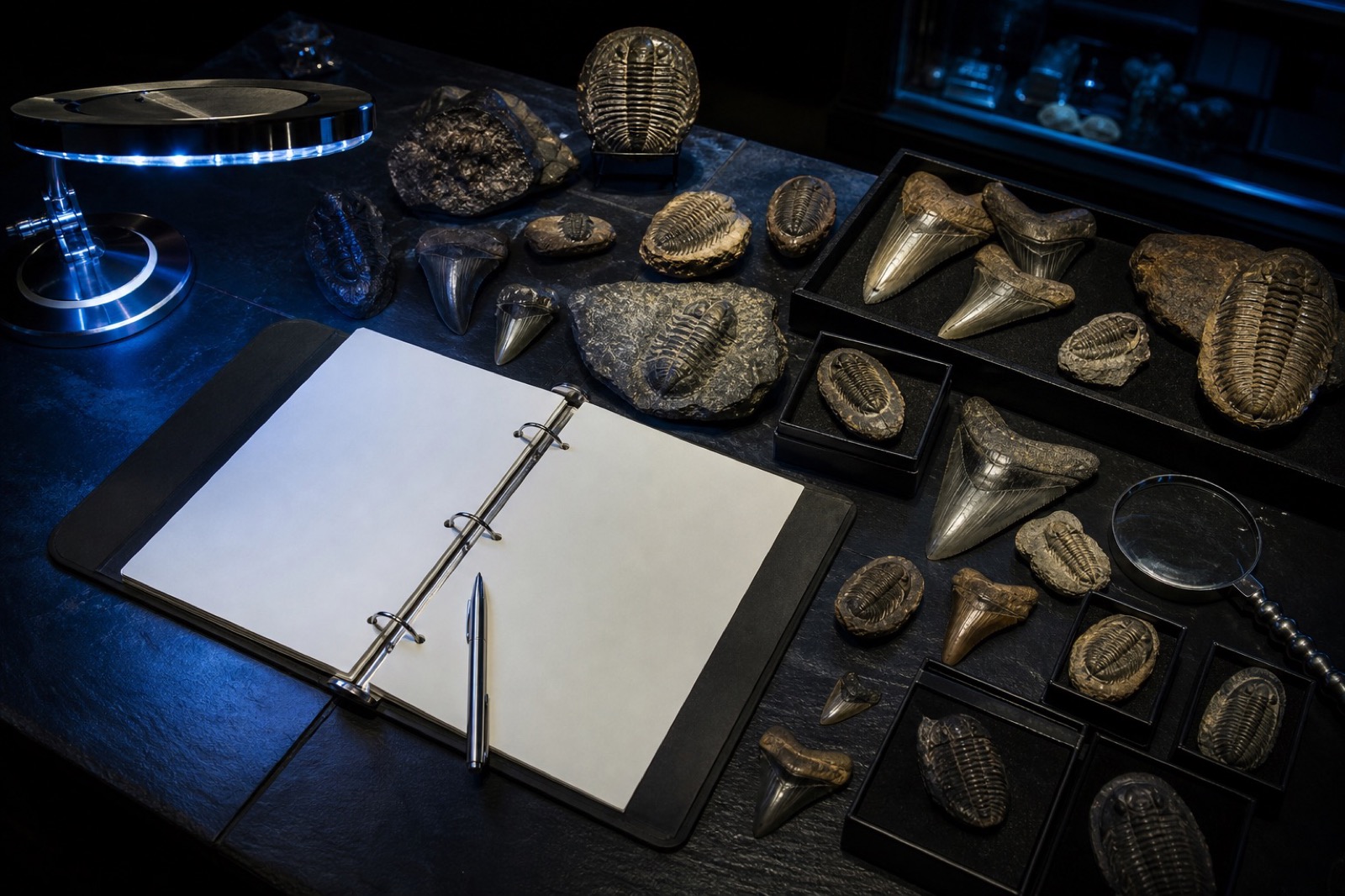
The fossil trade has always included craftsmanship that borders on theater: tip rebuilds that save a specimen, matrix touch-ups that stabilize a trilobite, and — less charitably — casts sold as genuine, jaws assembled from multiple animals, and paint that invents serrations. Online markets amplify the problem because photos are curated, lighting is flattering, and certificates of authenticity travel farther than the people who signed them. Spotting fakes is not cynicism. It is collector literacy.
This briefing covers cast tells, composites, hidden restoration, photo forensics, UV and weight habits, species-specific patterns, and a practical protocol you can run before bidding and after delivery. Pair it with Jurassic Depot authenticity scores and restoration disclosures — then verify with your own eyes when the parcel arrives. Fancy paperwork never outranks physics.
Why fakes thrive online
Demand for teeth and trilobites outruns supply of perfect specimens. Prep labs can make damaged material beautiful — and sometimes too beautiful. Anonymous sellers face weak reputational costs. Buyers chase length measurements and Hollywood species names. Algorithms reward engagement, not provenance. Together those forces create a market where a resin megalodon with airbrushed bourlette can outperform a genuine but imperfect tooth until someone with a UV lamp opens the box.
Three market facts make fraud sticky: (1) beauty shots hide seams that raking light reveals in seconds; (2) COAs are cheap to print and hard to audit; (3) many buyers never weigh or UV a parcel before posting a five-star review. Break any one of those habits and you become a harder mark.
Common fake
Cast teeth
Especially megalodon & rex
Common cheat
Hidden epoxy
Tips, roots, seams
Best tool
UV + side light
Cheap and decisive
Worst crutch
Fancy COA alone
Easy to print
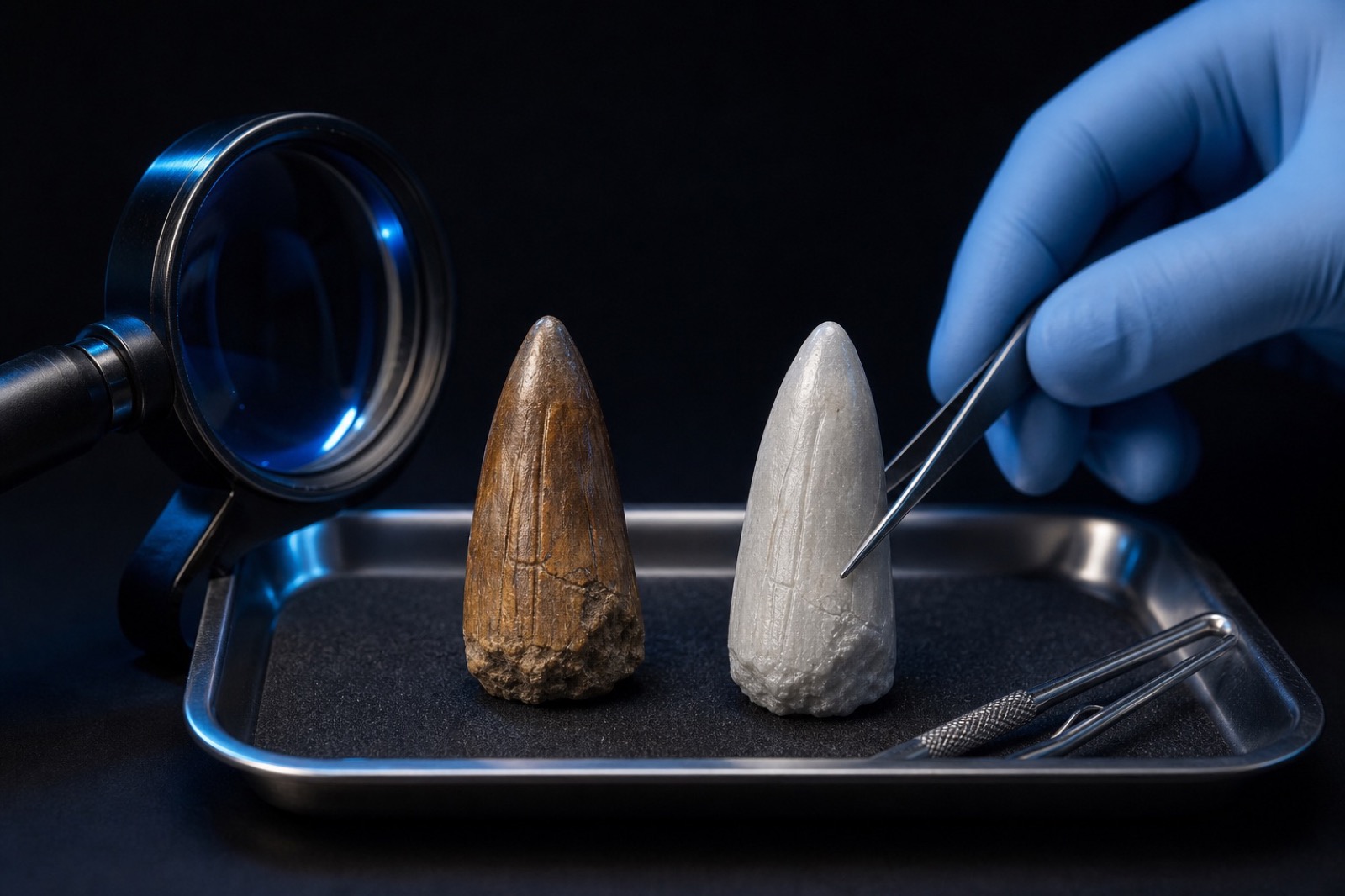 Sample photo
Casts and resin tells
Casts often show soft detail, repeated mold marks, overly uniform color, bubbles in resin, and weight that feels wrong for size. Painted casts may have brush strokes in valleys where enamel should be glassy. Cast roots sometimes look waxy. Ask for weight, scale bar, and reverse views. Compare serration spacing against known references for the species — mold lines love to soften or clone patterns.
- Uniform color without natural transition zones
- Soft or mushy serrations under magnification
- Air bubbles or seam lines along the midline
- Weight too light or oddly dense for mineralized bone
- Identical twins listed by the same seller weeks apart
- Scale bar missing or inconsistent across photos
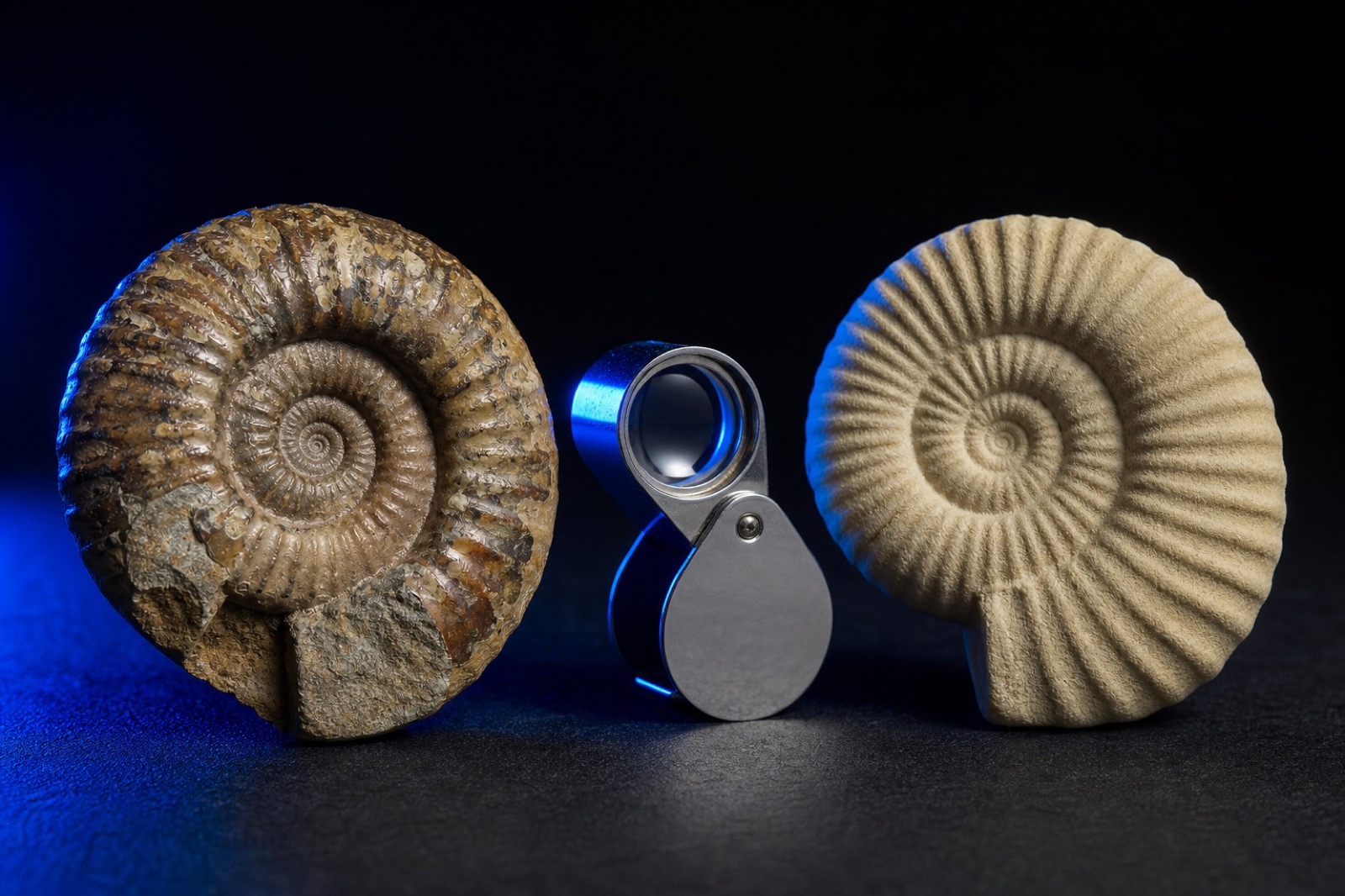 Sample photo
Composites and Frankenstein jaws
Composite jaws stitch teeth from multiple animals into one dramatic arcade. Sometimes the work is disclosed as a teaching composite. Sometimes it is sold as associated. Look for mismatched tooth sizes, inconsistent wear, matrix color changes at tooth sockets, and glue seams under raking light. Mosasaur and spinosaur material from commercial beds are frequent composite candidates because teeth are abundant and jaws sell for more.
Associated is a scientific claim, not a marketing adjective. True association means teeth and bone demonstrably belong to one individual from one quarry context. Dealers sometimes use associated loosely to mean we mounted these together. Ask which definition they mean — in writing. A disclosed composite teaching jaw can be a wonderful purchase. An undisclosed Frankenstein sold as field-associated is a different ethical category entirely.
Side light is your friend on jaws. Hold a bright lamp parallel to the surface and watch for glossy epoxy valleys between teeth, color breaks in matrix, and sockets that look carved to fit rather than natural. Photograph those angles before you bid if the seller will provide them; after delivery if they will not. Composites hate raking light the way casts hate magnification.
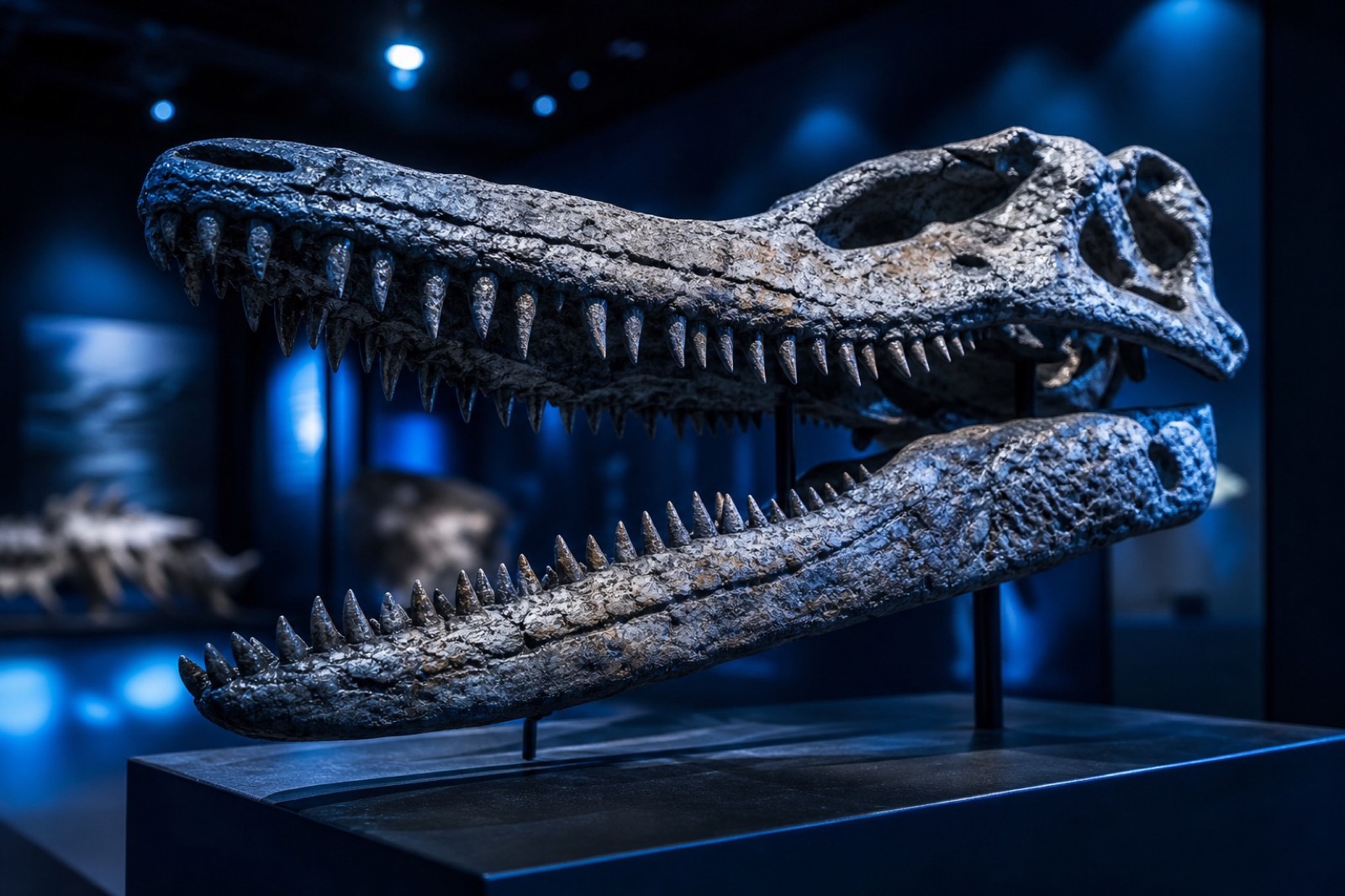 Sample photo
Hidden restoration and paint
Epoxy tip fills, root rebuilds, crack lines, and painted matrix are legitimate conservation when disclosed. They become fakes-adjacent when sold as pristine. Restoration percentage on Jurassic Depot listings exists so tip fill only is a searchable truth instead of a whispered rumor. If a seller refuses percentage language, assume the worst until photos and UV say otherwise.
Painted trilobites and dyed ammonites still circulate. Look for color sitting on high points, matrix pores filled with pigment, and eyes that look airbrushed. Prep maps — annotated photos showing what was rebuilt — beat adjectives like museum quality.
- Ask for a prep map (annotated photos) not just a percentage number
- Tip fills and root rebuilds should be named separately
- Matrix paint vs fossil paint — ask which surfaces were colored
- Crack lines stabilized with adhesive still count as restoration
- “Museum quality” is marketing; “0% restoration” on a large vertebrate is a claim to stress-test
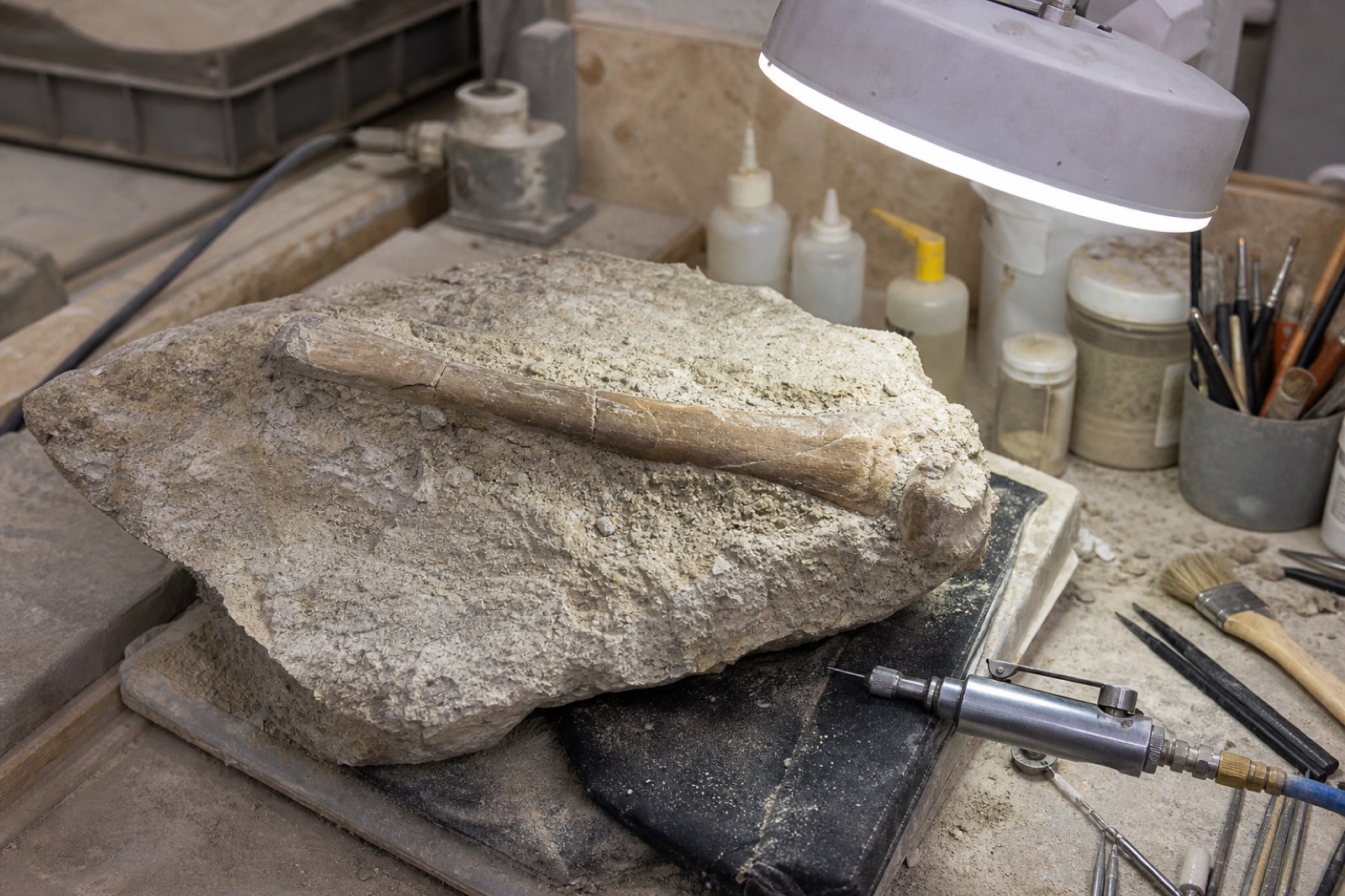 Sample photo
Photo forensics before you bid
Most fake sales die in the photo set — if you demand the right frames. Beauty shots under soft frontal light are advertising. Forensic frames are evidence. Before money moves, you want angles that make seams, paint, and mold lines uncomfortable.
- Scale bar in at least two photos (same bar, same specimen)
- Lingual / reverse / root views — not only the “pretty” face
- Raking-light shot across jaws, roots, and matrix contacts
- Close-ups of serrations, bourlette, eyes, or sutures for the taxon
- Unedited daylight photo if every listing shot is heavily color-graded
- Seller’s other inventory checked for mold-twin clones
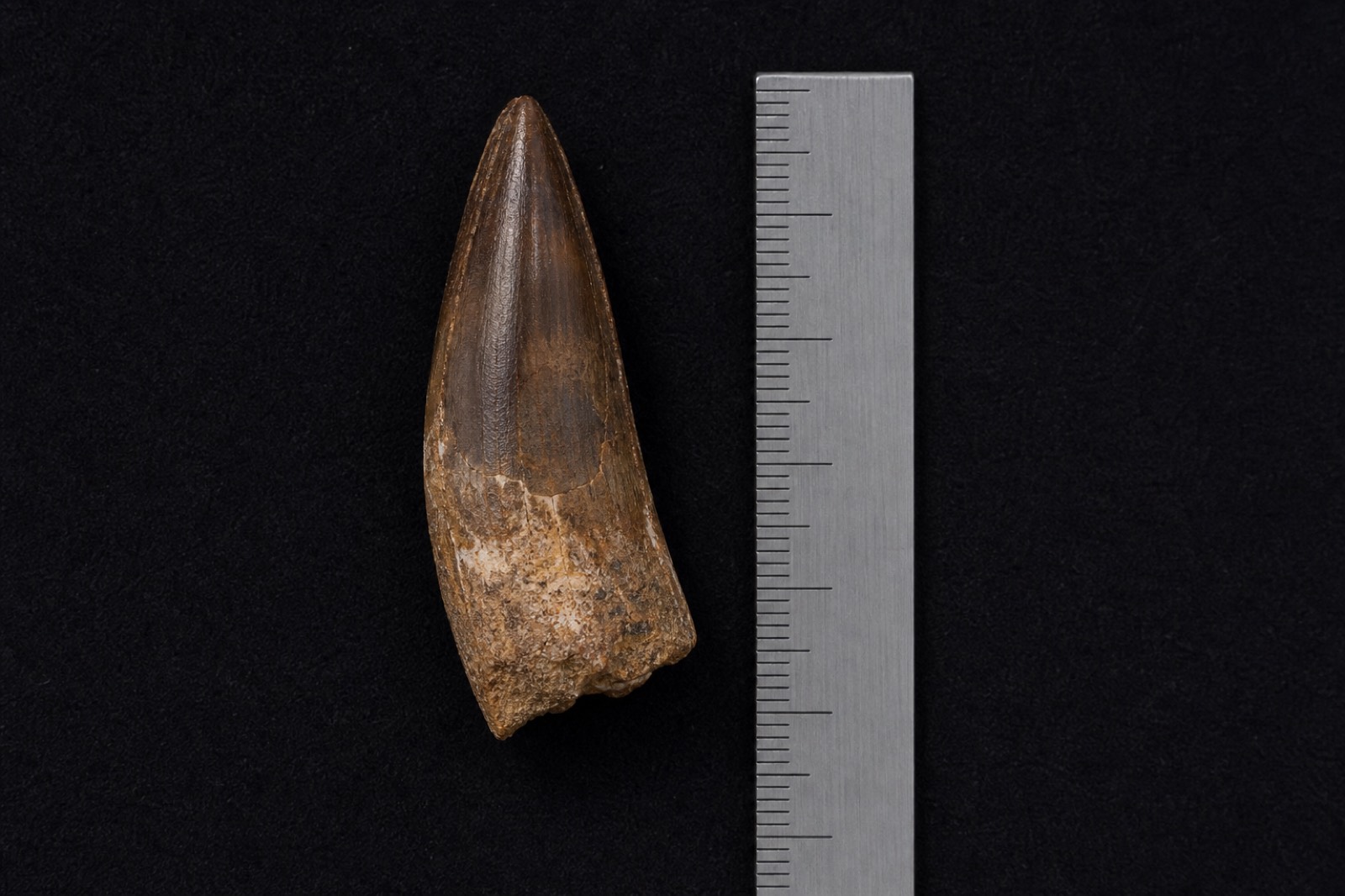 Sample photo
UV, side-light, and weight
A handheld UV torch and a bright side light are the cheapest authenticity lab you can own. Many epoxies fluoresce differently from enamel and bone. Side light reveals seams, fills, and texture mismatches that frontal flash hides. Photograph under both before you celebrate. Sellers who refuse UV-relevant photos on high-value teeth are telling you something — believe them.
Weight is the forgotten check. Resin casts and hollow rebuilds often feel wrong for size. Ask for grams before shipping; weigh on arrival with a cheap kitchen scale. A number that diverges wildly from similar genuine pieces in your reference shelf is data — not a vibe.
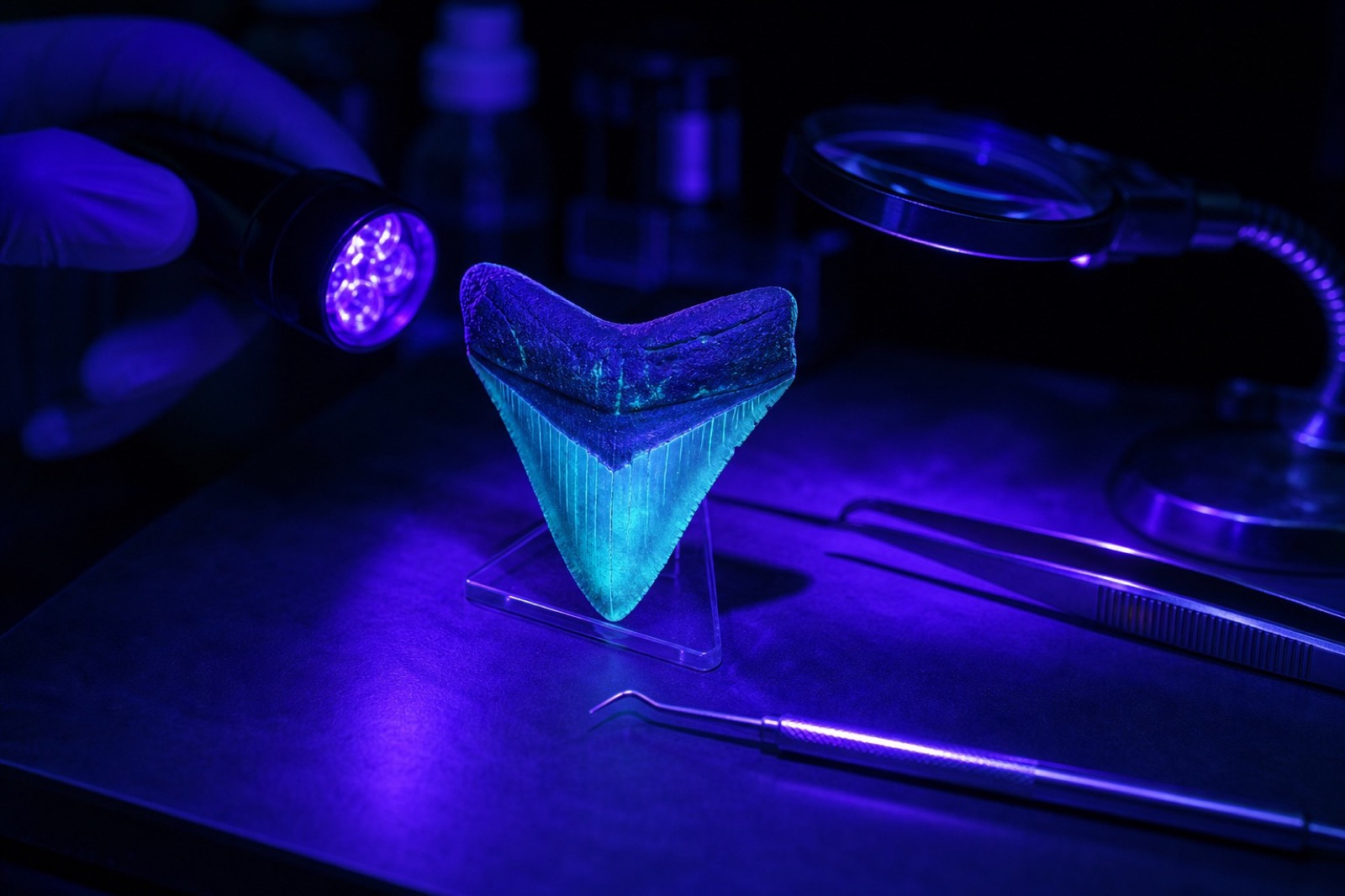 Sample photo
Interactive tool
Pre-purchase authenticity checklist
0/12 checked
Run this on any lot that would hurt to get wrong.
Species-specific fake patterns
Species spotlight
Tyrannosaurus rex (isolated teeth)
Late Cretaceous, Hell Creek & related formations
- Cast rex teeth are common; look for soft serrations and repeated chip patterns.
- Composite roots with genuine crowns appear in mid-tier markets.
- Legal private-land provenance does not prove a tooth is unrepaired.
A T. rex replaced teeth throughout life — nature made spare parts, but nature did not invent epoxy bourlettes.
Species spotlight
Otodus megalodon (teeth)
Miocene–Pliocene marine beds
- Watch bourlette shape, serration regularity, and root porosity.
- Airbrushed color and cloned nick patterns are classic cast tells.
- Weight and UV before you celebrate a “perfect” five-inch tooth.
The same popular molds have recirculated for decades — mold twins are a feature, not a coincidence.
Species spotlight
Moroccan trilobites & Kem Kem teeth
Devonian trilobites · Cretaceous Kem Kem beds
- Painted eyes and spine tips are still common on trilobites.
- Spinosaur / carcharodontosaur teeth: fluting inconsistencies and cast bubbles.
- Composite jaws and assembled dentitions sell for more than loose teeth — inspect sockets.
Morocco supplies both excellent genuine material and world-class prep theater — documentation and UV both matter.
Ammonites: carved sutures and polish that erases shell layers. Learn the failure mode of the taxon you love — general advice only gets you halfway. Pair this section with the dinosaur directory when you buy named theropod teeth.
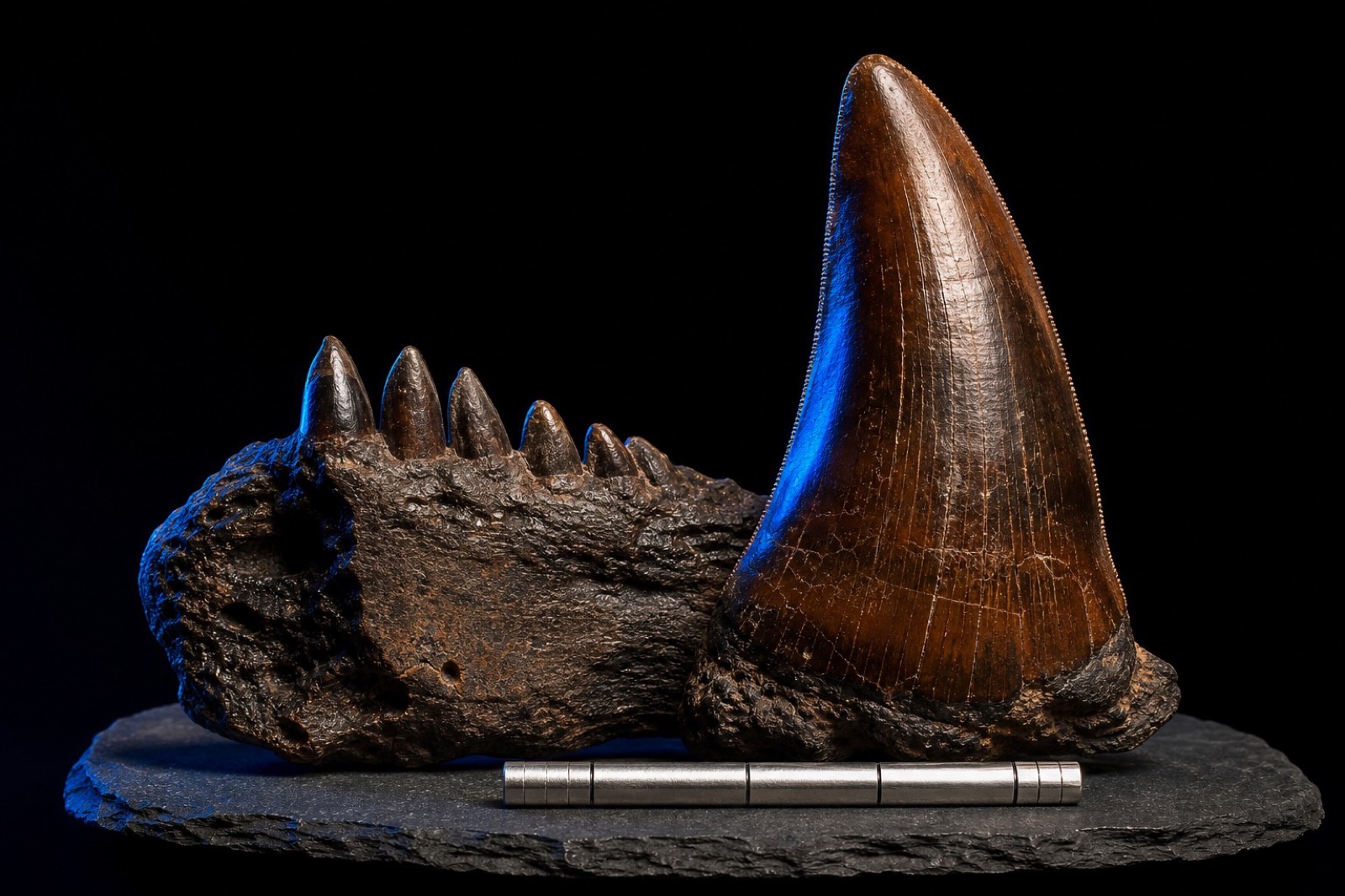 Sample photo
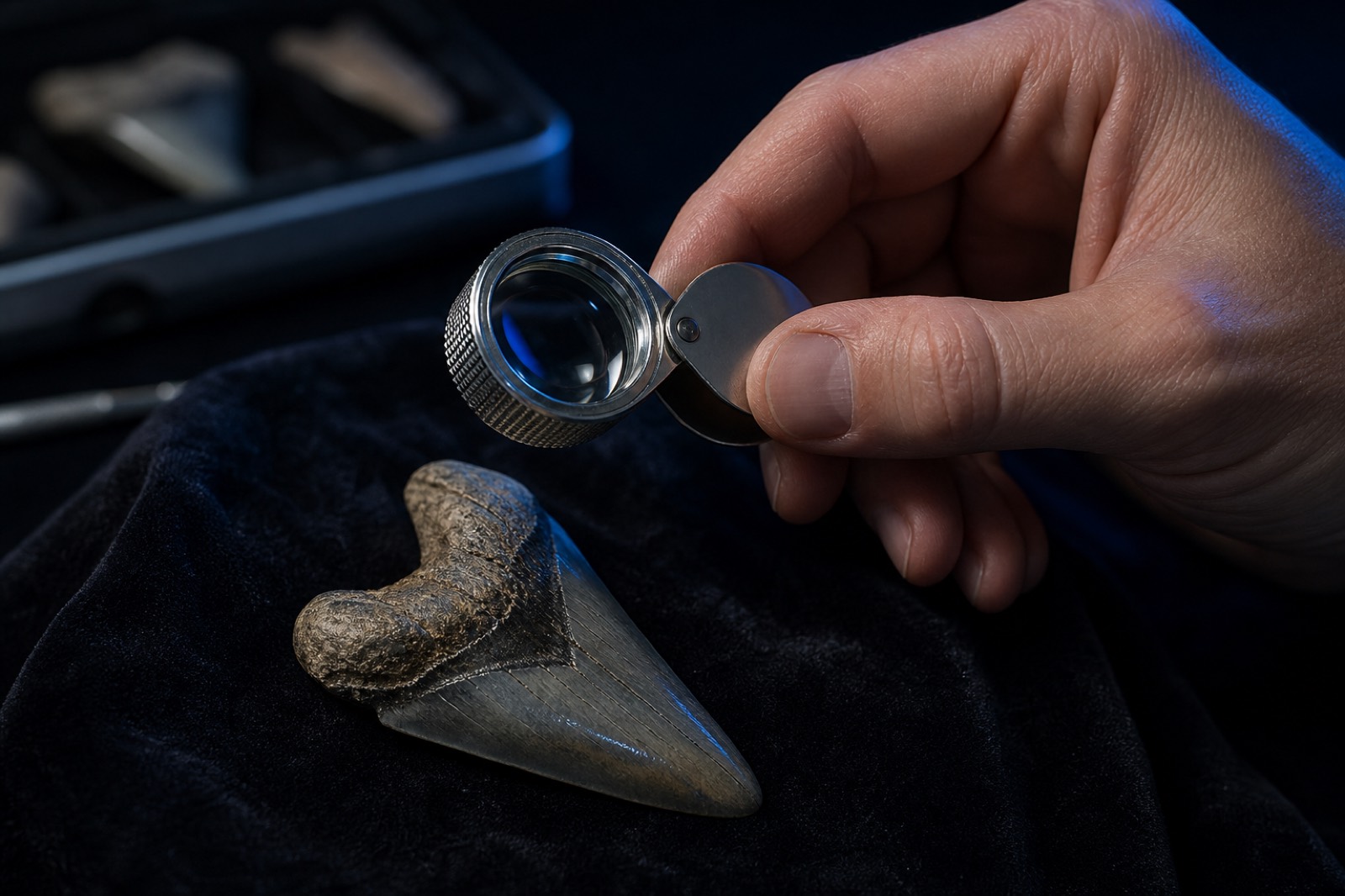 Sample photo
COA myths and what actually helps
Certificates of authenticity are easy to print and hard to audit. A COA from an unknown signer adds theater. What helps: chain-of-title admissions, prep maps, UV documentation, seller store history, and third-party expert review for expensive lots. Jurassic Depot treats COAs as optional attachments, not as score replacements. If a seller leads with certificate and dodges photos, invert your trust.
- Helpful: landowner release, export/import paperwork, prep map, UV map
- Helpful: named preparator notes and store ledger history
- Weak alone: unsigned COA, gift-shop seal, “guaranteed authentic” stamp
- Irrelevant to authenticity: high price, Hollywood species name, pretty box
Reader poll
Which fake pattern worries you most right now?
Results from fossil collector community
Buyer protocol before you pay
Protocol beats vibes. Open the listing authenticity and restoration panels. Open the store ledger. Request missing angles in messages. Compare price to recent comps. If the seller stalls, walk. After delivery, UV and side-light before you display. Document discrepancies immediately on-platform. That sequence turns anxiety into a checklist — and checklists are how professionals stay in the hobby.
Build a reference shelf. Keep one or two inexpensive genuine specimens in the taxa you buy most — a small megalodon, a common trilobite, a chalk mosasaur tooth — and learn how they look under your UV lamp and loupe. Calibration beats abstract advice. When a new purchase fluoresces like a traffic cone while your reference stays quiet, you have data, not a feeling.
Escalate for expensive lots. Community groups and paid authenticators exist for a reason. Pay for a second opinion before you pay five figures for a skull. Jurassic Depot scores and seller admissions are the briefing; expert review is the mission check. Combining both is how serious collectors sleep after a big bid.
- Read authenticity + restoration fields and screenshot them
- Open store document ledger and note private-on-file admissions
- Request missing angles / UV notes / weight in on-platform messages
- Compare price to recent comps and known cast price floors
- Confirm land type / export story matches the country claimed
- Bid only if answers are specific — adjectives are not answers
- On arrival: weigh, UV, side-light, loupe before display or social posts
- Report undisclosed major restoration immediately in the order thread
After delivery — the real exam
The listing check is screening. The parcel check is the exam. Do it before you post photos or leave feedback. Film a short unboxing if the lot was expensive — timestamped evidence helps if you need a dispute thread.
- Weigh immediately and compare to the seller’s stated grams
- UV in a dark room; photograph fluorescence patterns
- Raking light across roots, tips, sockets, and matrix contacts
- Loupe serrations / eyes / sutures against your reference piece
- Open JD Messages and document any undisclosed major fill before celebrating
How Jurassic Depot surfaces this
Authenticity scores, restoration percentages, linked UV maps, and seller document admissions exist so fake patterns are harder to bury. We still expect you to look. Sample photos on educational pages are labeled Sample photo so they never masquerade as a specific lot’s proof. When you browse auctions, treat every beauty shot as a hypothesis until disclosure and physics agree.
“UV light, matrix matches, and honest prep maps beat a fancy certificate every time.”